







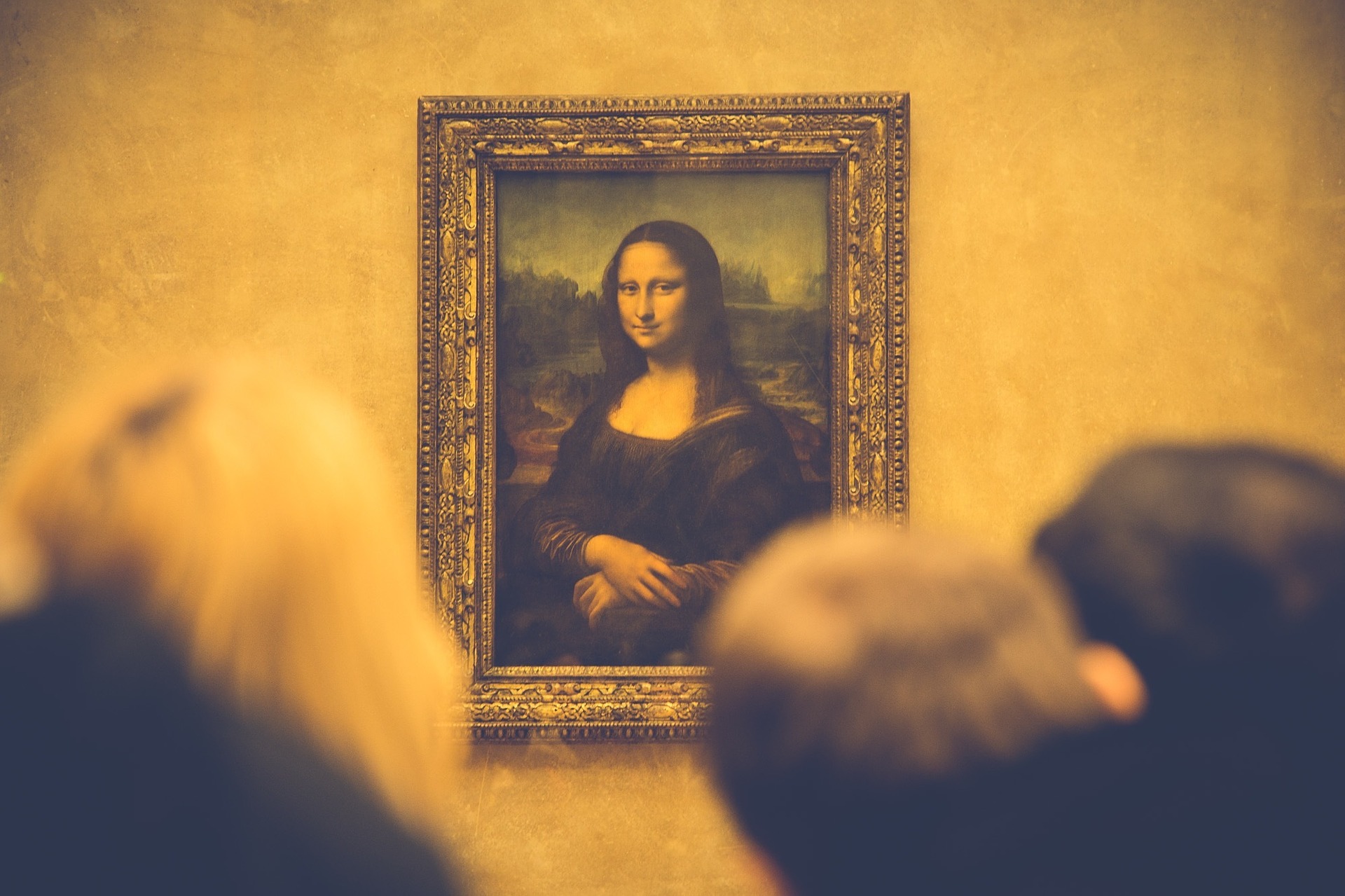
Leonardo DaVinci’s Mona Lisa is one of the world’s most famous paintings. Yet, if you’ve ever seen it (whether in-person or in photos) you’ll know it’s hanging on a plain wall in a mostly-empty room. The rationale for such simplicity of presentation was to help patrons avoid “museum fatigue” caused by over-stimulation. A 2017 study vindicated that logic as it found that “appreciating beauty takes conscious thought—and therefore, distracting a person can prevent them from fully taking in the work of art before them.” In other words: beauty is best enjoyed when there’s nothing around to steal attention away from where it’s supposed to be fixed.
What’s true of art is true of life. Life, as God has given it to each of us, is a gracious gift, a thing of beauty. But distractions are always lurking, threatening to pull our attention away from what really matters, truly fulfills, and eternally satisfies. In Ecclesiastes 5, the Teacher is going to help us avoid the “museum fatigue” of life so that we can better enjoy its beauty. He’s going to, first, telling us what not to focus on before, second, pointing us toward the work of art that demands our attention.
NOTE: This sermon was originally preached at Stone Ridge Bible Chapel in Hamilton, Ontario.
Manuscript
Leonardo DaVinci’s Mona Lisa is one of the world’s most famous paintings. Yet, if you’ve ever seen it (whether in-person or in photos) you’ll know it’s hanging on a plain wall in a mostly-empty room.
The rationale for such simplicity of presentation was to help patrons avoid “museum fatigue” caused by over-stimulation. A 2017 study vindicated that logic as it found that “appreciating beauty takes conscious thought—and therefore, distracting a person can prevent them from fully taking in the work of art before them.”
In other words: beauty is best enjoyed when there’s nothing around to steal attention away from where it’s supposed to be fixed.
What’s true of art is true of life. Life, as God has given it to each of us, is a gracious gift, a thing of beauty. But distractions are always lurking, threatening to pull our attention away from what really matters, truly fulfills, and eternally satisfies.
In Ecclesiastes 5, the Teacher is going to help us avoid the “museum fatigue” of life so that we can better enjoy its beauty. He’s going to, first, telling us what not to focus on before, second, pointing us toward the work of art that demands our attention.
Don’t Focus On Stuff
As I said, the Teacher begins with a warning. And the distraction he’s going to warn us about is as enticing as it is perennial. It’s the distraction of money, riches, materialism.
“If you want to enjoy the beauty that is life, if you want to get the most out of it, if you want to revel in its significance, don’t focus on stuff.”
He who loves money will not be satisfied with money, nor he who loves abundance with its income. This too is vanity. When good things increase, those who consume them increase. So what is the advantage to their owners except to look on? The sleep of the working man is pleasant, whether he eats little or much; but the full stomach of the rich man does not allow him to sleep.
There is a grievous evil which I have seen under the sun: riches being hoarded by their owner to his hurt. When those riches were lost through a bad investment and he had fathered a son, then there was nothing to support him. As he had come naked from his mother’s womb, so will he return as he came. He will take nothing from the fruit of his labor that he can carry in his hand. This also is a grievous evil—exactly as a man is born, thus will he die. So what is the advantage to him who toils for the wind? Throughout his life he also eats in darkness with great vexation, sickness and anger.
Ecclesiastes 5:10–17
To enjoy the beauty of life, don’t focus on stuff—money, toys, houses, comfort, travels, vehicles.
Why? First, because that pursuit is, according to the Teacher, vanity (5:10c). You’re familiar with this word at this point in your series. One author likens vanity—or, futility— to “a sustained pedal note on an organ, the theme drones on [throughout Ecclesiastes]”: vanity, vanity, all is vanity. In the present context, it’s not that money is useless or meaningless, it’s that its pursuit is vaporous. Fleeting, flighty, and unsubstantial. He asks, rhetorically, in verse 11: “So what is the advantage to their owners except to look on?” Answer: There is no advantage. A life that focuses its attention on the accumulation of stuff is like chasing steam from a kettle.
Read again verses 15 and 16. It has been often observed that you never see a hearse pulling a U-haul. Why? Because you can’t take anything with you, which makes stuff a fickle distraction in life.
But the Teacher doesn’t stop there. When we make wealth a driving motivation in life it leads to discontentedness.
He who loves money will not be satisfied with money, nor he who loves abundance with its income. … When good things increase, those who consume them increase.
Ecclesiastes 5:10a, 11a
Notice that money is called here “good.” It isn’t the stuff that’s the problem. It’s the focus on the stuff. And the Teacher, knowing this from experience and inspired by the Holy Spirit, warns that there will never be enough. With an increased income comes increased appetite and increased expenses. Focusing on stuff leads to a life of discontentedness.
It also leads to restlessness. “The sleep of the working man is pleasant, whether he eats little or much; but the full stomach of the rich man does not allow him to sleep” (5:12). Whether it’s his gluttony or worries about building, expanding, and keeping his “empire,” the one who makes riches a focus of life looses sleep. “Throughout his life he also eats in darkness with great vexation, sickness and anger” (5:17). That’s a dark picture of restlessness.
Finally, focusing on stuff leads to times of helplessness (5:13–14). My mind goes to Jesus’ illustration (Matt 7) of a foolish man who built his house on sand and a wise man who built his on rock. Both faced storms in life but only he who erected a life atop truth stood firm.
The Teacher is warning, if you build a life on the sand of stuff, don’t be surprised when it collapses and you’re left with nothing. Helplessness.
According to the Teacher, this is what can happen when we become distracted in life by the vaporous pursuit of material things. When we make money, riches, or savings our goal, when it consumes our time, energy, and thoughts, we’re inviting discontentedness, restlessness, and times of helplessness. It’s the exact opposite of a beautiful, enjoyable life. So, he says, don’t focus on stuff.
A while back I was having a conversation with a friend who was, at that time, a few years post-university and working in a high-paying field. In the course of our chat he looked at me and said, with sincerity and a matter-of-fact tone: “Money solves all of life’s problems.” It shocked me at first until I realized that, whether they say it out loud or not, most people believe that’s true: Money solves all problems. Life is better with money. If you want a good life and don’t want problems, get that money!
We live in a culture that is built atop the rat race, permeated by advertisements claiming their product will improve life, give meaning, bring fulfillment, and instil satisfaction. Our culture speaks of climbing the corporate ladder, getting ahead, and we idolize, platform, and listen to people, oftentimes for no other reason than they’re rich.
Our world preaches the gospel of the dollar and salvation through faith in cash. Whether we’re aware of it or not, the distraction of stuff is all around us trying to pull our attention away from what really matters.
Focus On Station
What really matters? That’s where the Teacher goes next. After warning his readers not to focus on stuff, he now instructs them to focus on station—on where we are in life at the moment.
Here is what I have seen to be good and fitting: to eat, to drink and enjoy oneself in all one’s labor in which he toils under the sun during the few years of his life which God has given him; for this is his reward. Furthermore, as for every man to whom God has given riches and wealth, He has also empowered him to eat from them and to receive his reward and rejoice in his labor; this is the gift of God. For he will not often consider the years of his life, because God keeps him occupied with the gladness of his heart.
Ecclesiastes 5:18–20
All of a sudden, God shows up! He was nowhere to be found in the first section of the passage but, here, God is mentioned four times in three verses. It’s as though in verses 10–17, as the Teacher taught what not to focus on, he was describing a focus that is “under the sun.” Now, however, he’s lifting our attention to that which is “above the sun,” namely, God.
And, with God now present, the Teacher calls for us to focus not on stuff but on station because, after all, where we are in life—whatever that looks like—is from God (5:18c, 19a, 19c, 20b).
To go through life focused on stuff is to chase something that comes and goes, something temporal, a potential byproduct of what really matters. But when we focus on our station—where God has us at this moment, whatever it looks like, and the tasks he’s given us to do—and when we submit ourselves to the sovereign care of he who is “above the sun,” the beauty of life is most enjoyed and appreciated.
In fact, as the text shows us, it brings true celebration (5:18a–b, 19a–b). When we live lives focused on what we’ve been given rather than what we must get, true enjoyment of those things is experienced. A focus on station brings celebration.
It also brings appreciation (5:18c, 19c). When we shift our focus from what we can get to what God has given, there’s less confusion over who should be thanked. When we focus on where God has us in life—our station—we realize that even the stuff we have is a divine gift. This leads to true appreciation.
Finally, it brings satisfaction (5:20). The brevity of life doesn’t bother someone who’s focused on the beauty of the gift because they’re too busy enjoying it. That’s a satisfaction money can’t buy.
Life under the sun is one that focuses on stuff. It’s a vaporous pursuit that brings the opposite of what’s actually desired: discontentedness, restlessness, and helplessness. The Teacher provides a better option: Life above the sun! One that focuses on our station—our God-given lot in life—and it brings true celebration, appreciation, and satisfaction.
I understanding that in this series you’ve been studying Colossians alongside Ecclesiastes, so let’s go there for a moment and remind ourselves, at least in part, what our station is as believers in Jesus.
We’re future inhabitants of an eternal kingdom of light (1:13). We stand redeemed and forgiven (1:14). In Christ, we’re reconciled to a holy God, blameless and beyond reproach (1:22). We are complete (2:10). We have been buried and raised up with Christ (2:12). Freed from penalty of death (2:14). We are part of a body (2:19). Secure in Christ (3:3). Beloved by God (3:12). Ambassadors of the saving gospel (4:3).
Over and above everything else in life, that is your station and mine as believers is Jesus Christ. How can we focus on stuff when we’ve got all that vying for our attention (Col 2:20–21)? “… Pursue money, get rich, collect stuff.” (See also Col 3:17).
And, still in Colossians, the apostle Paul gives us an example, I think, of someone who is focused, not on stuff, but on the station God has given him (1:24–29).
What Paul is teaching and modelling, the Teacher in Ecclesiastes is encouraging. Don’t allow yourself to be distracted from life’s beauty by stuff under the sun. Instead, focus on your station in life—as Paul says, “set your mind on the things above, not on the things that are on earth” (3:2)—and celebrate God’s provision and kindness.
Focus on Faithfulness!
Today, you and I are really being called to Focus on faithfulness! Set our minds and energies on what God has called us to do and let the results take care of themselves. Focus on faithfulness!
I believe that, ultimately, God has called his people to three primary tasks: exaltation, edification, and evangelization. He’s called us to worship him, build up other believers, and share the gospel with unbelievers. These are glorious tasks to which we are all called and we’ve all been given unique stations from which to accomplish them.
I encourage you this week to prayerfully focus on your faithfulness to those three tasks. How am I worshipping God? Do I come prepared to corporate worship? Do I see it as the privilege act of reverence it is? How do I worship apart from the body? With my family? In my car? How do I revel in the beauty of my God? Am I faithful to that task?
How am I activity being used by God to build up the body of Christ? I’m part of this body, I’m gifted to serve, I want to be faithful to that gift! How can I be? If you’re not serving the body, perhaps talk with the elders and find a way to do so. If you are, focus on faithfulness to that task.
How am I intentionally building relationships for the purpose of sharing the gospel with lost people? Am I praying for the lost regularly? Do I have people in my life I’m sure God has put there for that purpose?
Let’s focus on faithfulness. Focus on our station. Not on stuff. That’s life above the sun, not under it.

Josiah has served the Oakridge Bible Chapel family as one of its elders and one of its pastoral staff members since September 2018, before which he ministered as an associate pastor to a local congregation in the Canadian prairies. Josiah's desire is to be used by God to help equip the church for ministry, both while gathered (edification) and while scattered (evangelization). He is married to Patricia, and together they have five children—Jonah, Henry, Nathaniel, Josephine, and Benjamin.