







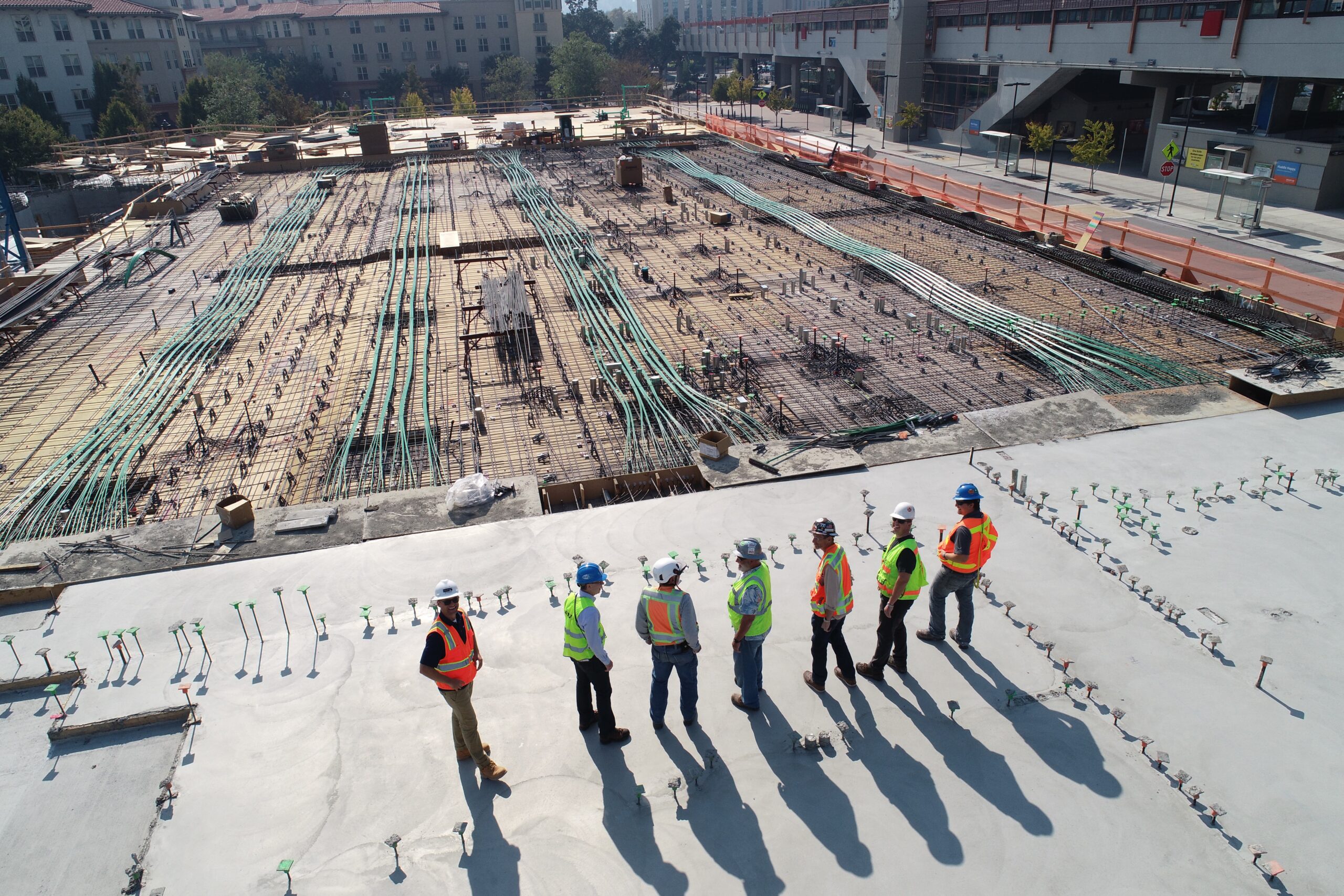
As our world slowly emerges from its COVID-imposed isolationism, many wrestle with the changes they see and the rebuilding that needs to take place. Interestingly, God’s people faced a similar reality as they returned to the Promised Land from Babylonian exile. Life was different now and they had to work toward restoration. Perhaps, as God’s people today, we can learn something from their experience.
Listen below through Spotify, or find our Podcast “From the Pulpit” for weekly Sunday morning messages on Anchor, Apple Podcasts, Spotify, and wherever else podcasts are found.
Manuscript
In almost every post-apocalyptic or natural disaster movie there’s that scene in which the main characters, with the danger now gone, reluctantly emerge from the shelter that aided their survival and take stock of the world that’s left. You probably know the scene I’m talking about.
The camera zooms in on their faces as they look around at what used to be familiar but is now unrecognizable. They often appear to be both relieved to be alive and overwhelmed at the prospect of rebuilding.
I’ll be honest: I kind of feel like that these days.
As the world cautiously but necessarily emerges from our COVID-imposed isolation, we find ourselves both thankful that we made it through and burdened with the rebuilding that lays ahead. In many ways it’s as though the pandemic has shaken the Etch-a-Sketch of our lives, wiped away what was, and handed us back a clean slate to work with.
If you have a Bible, turn to Haggai (the third-to-last book of the OT). Today, in chapter one, we’ll find God’s people facing a very similar situation: They were looking at a world once-familiar, but now changed. Life had been shaken-up and now they were rebuilding on a clean slate. And we’re going to see if there’s anything we can learn from their experience that will help us in ours. And you know there is!
I want to structure our time in the text today under two categories in order to help us understand and follow what we’re being taught: The mistake made and the price paid.
Before we get to the text, let’s set the context.
In 586 BC, after many warnings, God used the nation of Babylon to judge his people for their persistent idolatry. Jerusalem was destroyed, along with Solomon’s temple, and most of God’s people were taken captive back to Babylon. It was a disciplinary exile.
Decades later, when their national time-out was completed, the Jews were allowed to return home and they did so in at least three waves. The first was led by Zerubbabel who we’ll hear mentioned throughout the book of Haggai. The second and third waves were led by Ezra and Nehemiah respectively, both of whom have books of the Bible named after them which record their efforts to rebuild post-exilic Jewish life.
Haggai himself was a prophet through whom God spoke to his people during the first wave of rebuilding life in the Promised Land and chapter 1, which we’re going to look at today, calls attention to The mistake that was made by God’s people as they sought to rebuild.
(vv. 1–4) In the second year of King Darius, on the first day of the sixth month, the word of the Lord came through the prophet Haggai to Zerubbabel son of Shealtiel, governor of Judah, and to Joshua son of Jozadak, the high priest:
This is what the Lord Almighty says: “These people say, ‘The time has not yet come to rebuild the Lord’s house.’ ”
Then the word of the Lord came through the prophet Haggai: “Is it a time for you yourselves to be living in your panelled houses, while this house remains a ruin?”
While they had returned from exile and began trying to get life back to normal, God’s people had made a mistake: They had ignored the house of the God who had just disciplined and restored them.
The people are saying to themselves, “We’ll get to the temple eventually.” They knew it should be done but they were delaying construction.
On the other hand, God is saying to them, “You’ve got time to panel your houses but abandon my house?” Notice the contrast. They weren’t homeless or living in shacks. No, they were living in luxury. Panelling was a sign of opulence and affluence as timber had to be imported. Today we might say they had an in-ground pool, backyard gazebo, and four-car garage. Great things but certainly not in the category of essential.
Across the city, though, God’s house hadn’t even become usable again. It wasn’t merely missing some paint and trim—it was in ruins. Their houses: beyond functional. God’s house: not even functional.
That was the mistake they made and God, through Haggai, is telling his people that this is unacceptable. His house is too important and too significant to be left in disrepair. Why?
(v. 8) Go up into the mountains and bring down timber and build my house, so that I may take pleasure in it and be honoured,” says the Lord.
Why is the temple significant to God? Because, first, it brought him pleasure: “… so that I may take pleasure in it.”
From the beginning, the Creator wanted a relationship with his creation. So much so that, even when humanity rebelled, he kept pursuing. He called a people out for himself, wanting to be their God and for them to be his people. He gave them land and instructions to build a house in which he would live among them and be accessible to them.
Psalm 132:13–14 says, “For the Lord has chosen Zion [that is, Jerusalem] / he has desired it for his dwelling, saying, / This is my resting place for ever and ever; / here I will sit enthroned, for I have desired it.”
The OT temple pleased God because it was where he dwelled specially with his people before Acts 2 and the coming of the Holy Spirit. While today, as Christians, our bodies are the temple in which God lives in a special way, then the temple was the temple.
It was where God’s people went to meet with God, commune with God, learn about God, and find atonement with God. God desired this relationship, provided for this relationship, and it pleased him when they responded rightly.
So, why was the temple significant to God? First, because it brought him pleasure and, second, it brought him honour.
(v. 8) Go up into the mountains and bring down timber and build my house, so that I may take pleasure in it and be honoured,” says the Lord.
The word here for honour can be translated as glory, meaning the weight or worth of something.
Being the place where God’s presence dwelled in a unique way meant that the temple was also the place where the weight of his majesty and power was also uniquely manifested and experienced on earth.
First Kings 8 records the transfer of the furniture, including the Ark of the Covenant, from the Tabernacle, the temporary and portable temple, into the newly finished permanent Temple in Jerusalem.
The priests then brought the ark of the Lord’s covenant to its place in the inner sanctuary of the temple, the Most Holy Place, and put it beneath the wings of the cherubim. The cherubim spread their wings over the place of the ark and overshadowed the ark and its carrying poles. …
When the priests withdrew from the Holy Place, the cloud filled the temple of the Lord. And the priests could not perform their service because of the cloud, for the glory of the Lord filled his temple (1 Kings 8:6–7, 10–11).
God’s house, the temple, was significant to God because it brought him pleasure and honour.
Now, in Haggai 1, the Israelites had been apart from this temple for decades in Babylonian exile and, now, having been brought back by God himself, they seem more interested in their homes than his.
We find in verse 12 that this mis-prioritization is fuelled by irreverence.
Then Zerubbabel son of Shealtiel, Joshua son of Jozadak, the high priest, and the whole remnant of the people obeyed the voice of the Lord their God and the message of the prophet Haggai, because the Lord their God had sent him. And the people feared the Lord.
Haggai reminds the people of the fearfulness of God that they had forgotten. It’s a knowledge of God’s character and power that brings us humbling awe and motivates joyful obedience.
They knew what God wanted (that wasn’t a mystery), but they also knew what they wanted. And so, forgetting who God was and what he had done, they prioritized their own preferences over God’s pleasure and honour.
I’m convinced this is one of the greatest threats to Christianity today. We are all susceptible to the subtle and gradual erosion of the conviction that God’s priorities must be our priorities. Instead, we get distracted (sometimes by good things [like building a house]!) and end up re-prioritizing our lives, our churches, and our world-views to line-up with things like our preferences, our desires, our cultural demands, our preferred ideologies, or our pragmatic solutions instead of God’s Word. Unwittingly we become the creaturely tail trying to wag the Almighty Dog.
What are God’s priorities for us? He’s clear: Worship him, become more like him, and reach others for him. Those are our marching orders. And when they are reverently prioritized and done in the way he calls us to do them in his Word, he is pleased and honoured.
God sent Haggai to correct his people and the mistake they made. Now, I want us to notice the PRICE they paid. In other words, what were the consequences they faced for their error and could those be our as well if we make the same mistake?
Now this is what the Lord Almighty says: “Give careful thought to your ways. You have planted much, but harvested little. You eat, but never have enough. You drink, but never have your fill. You put on clothes, but are not warm. You earn wages, only to put them in a purse with holes in it.”
This is what the Lord Almighty says: “Give careful thought to your ways.
“Think about it!” God says. “There has been ample evidence that what you’re doing displeases me. Your irreverence is costing you.”
As long as the people were favouring their own preferences over God’s, they were forfeiting a measure of divine provision. “You’re working hard with nothing to show for it. Your feasts are unsatisfying, your parties are lame, your bodies are cold.”
Haggai continues.
“You expected much, but see, it turned out to be little. What you brought home, I blew away. Why?” declares the Lord Almighty. “Because of my house, which remains a ruin, while each of you is busy with your own house. Therefore, because of you the heavens have withheld their dew and the earth its crops. I called for a drought on the fields and the mountains, on the grain, the new wine, the olive oil and everything else the ground produces, on people and livestock, and on all the labor of your hands.”
Because they had misprioritized their efforts, God’s people were struggling economically, materially, and socially. They had forfeited a measure of divine provision.
And not only that, but they also forfeited a measure of divine power:
Then Haggai, the Lord’s messenger, gave this message of the Lord to the people: “I am with you,” declares the Lord. So the Lord stirred up the spirit of Zerubbabel son of Shealtiel, governor of Judah, and the spirit of Joshua son of Jozadak, the high priest, and the spirit of the whole remnant of the people. They came and began to work on the house of the Lord Almighty, their God, on the twenty-fourth day of the sixth month.
After the people repent, God reaffirms his presence with them and stirs up the spirit within, not only their leadership, but the masses. God gives his people a shot of divine adrenaline. He empowers them to do what they should be doing, power they had been without while ignoring God’s priorities.
The same makes sense today. God empowers and rewards his people who commit themselves to doing his work his way.
Imagine I asked my seven-year-old to wash our family minivan. If he goes about that task the way I want him to and the way I tell him to, it will please me, I’ll cheer him on, give him what he needs for the job, and likely reward him afterward.
But if he delays the job, or if he claims he’ll get to it after he’s done putting the final touches on his latest lego creation, I’m less likely to be in his corner.
Or, if he does go to do the work I’ve asked him to do but insists that steel wool cleans better than a sponge or that apple juice leaves a nicer smell than water; in other words, if he insist on doing the work his way and not mine, I’m less likely to be pleased, to cheer him on, to bring him more of what he claims to need, and to reward him after the fact, no matter the purity of his intentions. I want him to do the work the way I’ve told him to do it, trusting me that I know what’s best.
Like the people of Haggai’s day, if we, as Christians, take it upon ourselves to re-prioritize God’s work, re-imagine the method, re-structure the authority, re-think what’s important, we will forfeit a measure of his provision and his power.
The people of God were making a costly mistake. But, God lovingly corrected them and, to their credit, they listened, and God blessed them for their obedience and empowered them to do the work he called them to do.
In a similar way, perhaps God is speaking to you, individually, and us, collectively, today, calling for priority reform as we emerge for our COVID bunkers and look around at the world we’re left with.
Perhaps, just like he said twice to the people in our text (vv. 5, 7), God is calling for you to Give careful thought to your ways!
Like the Israelites returning from exile to the ruins of Jerusalem, our lives have been shaken up and we’re faced with the task of rebuilding in many ways. Now’s the time to Give careful thought to your ways!
And I don’t think there’s a better place to look to examine our priorities—as individuals, as families, and as a church—than how we spend our money and how we spend our time. If you wanted to get a good idea of what’s important to me, you wouldn’t need to look any further than two apps on my phone: My banking app and my calendar app. Those would give you a pretty good indication of what’s important to me.
I want to encourage you this week, in light of Haggai 1, to take time to give careful thought to your ways by sitting with your budget and your day planner—whatever that looks like for you—and prayerfully examine what they say about your priorities. If you’re brave, ask someone you trust to look over your shoulder—sometimes others see things we don’t.
God calls us to worship him, to become more like him, and to reach others for him.
For each of those priorities he’s also given instructions on how best to accomplish them and what they each look like. I’m called to worship God the way he desires, to grow in holiness by the means he’s provided, and reach others by sharing the saving message of Jesus Christ with them.
Does how I spend my time and money reflect those priorities? Run both resources through the three priorities.
Does my calendar communicate that it’s a priority for me to spend time worshipping God (alone, as a family, and as a church family)? How much time do I spend dedicated to my pursuit of Christlikeness in prayer, study, conversations about things above, reading books about aspects of God’s character and work that I don’t understand as much as I should? How much time do I spend with unbelievers for the purpose of building relationships that will give me an opportunity to share the words of life with them?
What about my money? Does how I spend my money communicate that worship is a priority in my life? Giving to the local church is an act of worship, just as much as singing is. Do my spending habits reveal a desire to grow in holiness or reach the lost?
I’m sure you get the idea and I’m also sure you’re sufficiently uncomfortable at this point, just like I am. But we’re called here today, by God through Haggai, to Give careful thought to our ways.
Are your priorities in line with God’s? If not, maybe it’s time for correction. Maybe you’ve been forfeiting God’s power and provision and you didn’t even know it. Let’s give careful thought to our ways this week.
This has been a difficult season for me as I’m sure it has been for many of you as well. Let’s not waste it. God used exile, he used a time of rebuilding, he used Haggai to correct, realign, and bless his people. And he can do it again today.

Josiah has served the Oakridge Bible Chapel family as one of its elders and one of its pastoral staff members since September 2018, before which he ministered as an associate pastor to a local congregation in the Canadian prairies. Josiah's desire is to be used by God to help equip the church for ministry, both while gathered (edification) and while scattered (evangelization). He is married to Patricia, and together they have five children—Jonah, Henry, Nathaniel, Josephine, and Benjamin.