








Good representation can make a big difference. Consider, for example, legal representation. The difference between a good lawyer and a bad lawyer can mean the difference between incarceration and emancipation, between a criminal record and a clean record. Obviously, it’s important and beneficial to have experienced, passionate and well-equipped representation!
And that’s exactly what God provides for his people: representation of the highest order in the highest court before the highest Authority.
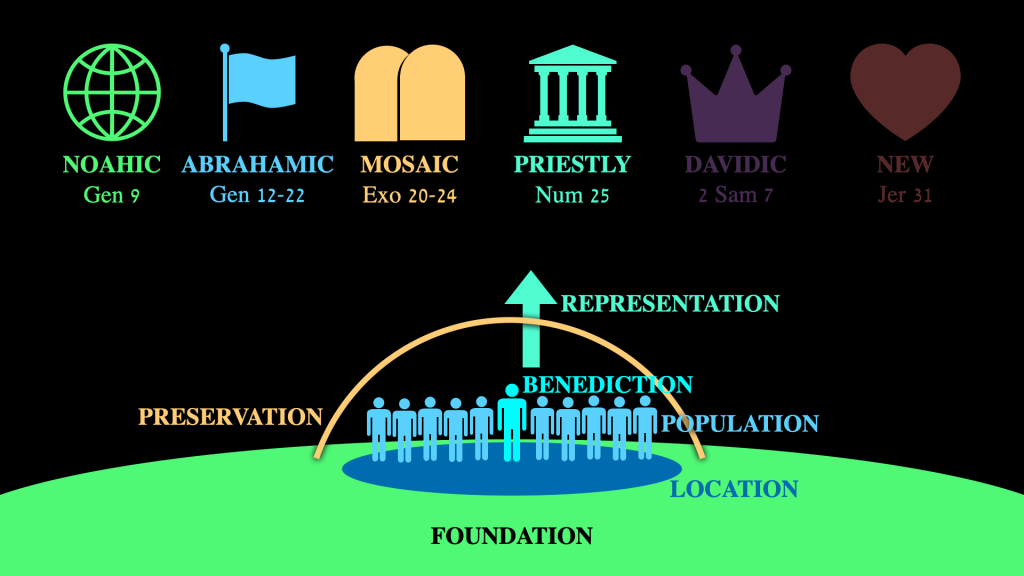
While the Noahic covenant laid the foundation (Genesis 9), the Abrahamic covenant predicted a location for a benediction-spreading population (Genesis 12–22), and the Mosaic covenant established a means of preservation for that population (Exodus 20–24), the Priestly covenant promises perpetual representation for God’s people in the presence of Almighty God.
SERMON MANUSCRIPT
Good representation makes a big difference. Consider, for example, legal representation. The difference between a good lawyer and a bad lawyer can mean the difference between incarceration and emancipation, between a criminal record and a clean record.
My brother and sister-in-law are both lawyers and so I asked them how to tell the difference between a good and bad lawyer. He responded:
“I’d say a bad [lawyer] is one who lets anything … detract from the best interest and objectives of their client. For example, pretending they know what they’re talking about just to get the file, over-complicating and over-billing the file, telling the client what they want to hear rather than what’s realistic, [or] being too concerned about their own reputation.”
Now, that’s bad representation.
I suppose then that good representation would be truthful, focused, and selfless. Someone who feels called and equipped to a specific service and dedicated to doing it well would be good representation. And representation makes a big difference.
This morning, we’re going to see how God provides his people with representation of the highest order in the highest court before the highest Authority.
Turn to Numbers 25. In this often-neglected corner of Scripture we find an often-forgotten covenant that God makes with an often-ignored man named Phinehas. This is the Priestly covenant and, as we’ve already done with the Noahic, Abrahamic, and Mosaic, and as we will do with the Davidic and New covenants in the weeks ahead, this morning we’re going to ask three questions of God’s oath with Phinehas.
Question one: what is it? What are its contents? What does it tell us about God’s intentions? What expectations does it create? What is it?
Question two: where does it fit? How does the Priestly covenant relate to the other five and to God’s rebuilding project? Where does it fit?
Finally, question three: why does it matter? How does this oath shape the way we’re to think about God, his plans, purposes, and people? Why does it matter?
What is the Priestly covenant?
When answering this question it’s important to remember that the Mosaic covenant has just been signed, sealed, delivered. [Ex 24:7–8] The ink (or, the blood, in this case) was still wet on that covenant when we come to this one.
So, the sinful setting of Numbers is jarring. It opens with a lot of, well, numbers: counting people, arranging tribes, assigning jobs, and preparing Israel to pack up and leave Mount Sinai and move into the land God promised them.
But along the way the people do what the people tend to do: they sin. They complain. [11:1a, 4c–6; 21:5] They’re jealous of Moses. [12:1–2] They doubt God’s faithfulness and ability to keep his covenant. [13:27–28a] They rebel. [14:2–4; 16:1–3] They disobey. [15:32]
And so, as we come to Numbers 25, we’re not dealing with model citizens. God’s keeping his promises—there hasn’t been a flood and there’s a huge population headed to a promised location. But the people aren’t keeping their promises. “All that the Lord has spoken we will do, and we will be obedient!” Yeah, right.
This behaviour continues into chapter 25. [25:1–3] By my count, Israel is breaking at least four of the ten commandments right there. God had warned them. [Ex 20:4–5] Israel is being unfaithful to the God who has been faithful to them. They’re spitting on his grace, disregarding the covenant to which they agreed. So, the Lord was angry against Israel.
[25:4–5] This is a merciful offer, though it may not seem it at first. God’s willing to preserve this treacherous nation while upholding the terms of the oath they all swore together. Here, like on the cross, we see God’s justice and love, his wrath and mercy, inseparably expressed. They do not contradict each other but, rather, necessitate one another. To love is to hate evil, love’s enemy. To stomp out evil is one of the most loving acts there is.
In spite of God’s prescription, it gets worse! [25:6] While the nation is broken and repentant in God’s presence, one guy takes a foreign woman, a worshipper of Baal, makes sure Moses and everyone is watching, and takes her into the tent. “You know what I think of you, Moses? You know what I think of you, God, and this little agreement we made at Sinai? I’ll show you.” It’s a flagrant act of rebellion.
[25:7–9] No wonder the people were weeping at the tent of meeting, a disciplinary plague was running rampant. Phinehas, seeing this act of defiance against God, emerges from the mass of people, and puts an end to both the sin and the sickness. It’s a zealous response.
Now, here comes the gracious covenant. [25:10–13] Notice that, like the Noahic and Abrahamic covenants, and unlike the Mosaic covenant, the Priestly covenant is unilateral. It’s only God swearing the oath. Phinehas wasn’t looking for one, working for one, or expecting one. He was just overwhelmed with godly jealousy for God’s law and reputation.
So God rewards him with a covenant of peace, promising his descendants the privilege of the priesthood, now and forevermore.
Now, a priest represents people before God, offering sacrifices and services on their behalf; representation for creatures before the Creator. And this covenant guarantees that Phinehas, and his descendants after him, will serve as a perpetual priesthood. [Ps 106:28–31]
Who would you want representing you in a court of law but someone who comes highly recommended with a track-record of passion and skill? Well, who would you want representing you before God but someone God himself selected with a track-record of a God-like jealousy for righteousness? That’s good representation.
So, what is the Priestly covenant? It’s an oath sworn by God that, because of his zeal to protect God’s reputation, Phinehas would have the privilege of an everlasting priesthood, being for God’s people their perpetual representation before God himself.
Where does the Priestly covenant fit?
While the Noahic covenant laid the foundation (Genesis 9), the Abrahamic covenant predicted a location for a benediction-spreading population (Genesis 12–22), and the Mosaic covenant established a means of preservation for that population (Exodus 20–24), the Priestly covenant promises perpetual representation for God’s people in God’s presence. And it’s good representation. Not self-serving, egotistical, and dishonest but a zealous, hand-picked priesthood.
Now, when’s this going to happen? Turn to Jeremiah 33. Jeremiah is ministering during a dark time for Israel but here he points them to the future to give them hope, a hope tethered to the clarity and certainty of the biblical covenants. [Jer 33:14–18]
We’ll return to this passage in a couple of weeks but, for now, notice that a time’s coming when a Righteous King will rule over a righteous world. This is the coming kingdom of God. And notice there are priests. Ezekiel describes the kingdom temple in Jerusalem, filled with God’s glory, and serviced by Phinehas’s line. [Eze 43:18–19]
Why will there be sacrifices in the kingdom? Well, they won’t be for sin or guilt because Christ, who will be on the throne, was that offering. [Heb 10:4, 11–14] But not all OT sacrifices were for sin. Some expressed devotion to God or adoration of God. Others celebrated God’s provision or God’s fellowship. It seems these would be appropriate to keep doing forever—worship, adore, celebrate, and maybe commemorate, like we do at the Table every week now.
What is for sure is that God has provided humanity with perpetual representation of the highest order in the highest court before the highest Authority. And good representation makes a big difference. That’s how the Priestly covenant fits.
Why does the Priestly covenant matter?
I think it prompts us, as God’s people, to do at least three things. First, the Priestly covenant reminds us to thank God for good representation. How kind is our God? He seeks us, draws us, saves us, keeps us, transforms us, and uses us all in spite of ourselves.
But he also provides, prepares, and prompts people to represent us before himself; to pray for us, to regularly take us before his throne. These are parents and grandparents, pastors and elders, friends and neighbours that intercede on our behalf often unbeknownst to us. What a gift, a gift of which we won’t even know the worth until glory. When the Lord takes those people home there’s a sense in which we lose that intercession, that covering, that power, that gift, that representation.
[1 Tim 2:1–2] There are major prayer warriors in this church—some I know, others remain anonymous—who labour to represent the rest of us before God. On behalf of your church family, “thank you.” And thank God for equipping and convicting you to that crucial ministry.
We will be perpetually represented before God in God’s kingdom by hand-selected, godly people. As a foreshadow of that day, we are now also. Thank God for good representation.
Second, the Priestly covenant reminds us to ask God to make us good representation. [25:11] Are we jealous with God’s jealousy for God’s reputation and for the good of a sinful world? When you see the sins of this world, the spit-in-God’s-face flagrant rebellion against he who loves the world with an immeasurable love, does it bother us? Or have we become desensitized, acclimatized, numb and dumb to the dangers?
[1 Pet 2:9–12] It’s not possible to represent our coming King well when we don’t look much like him, when we don’t care much for what he cares about, or when we tolerate what he can’t.
May the Lord raise up out of the midst of the population, a congregation in Oakridge full of Phinehas’s, zealous for God, jealous for the lost, longing for people to experience the life God wants them to experience, the life for which they were created. But it starts with us asking God to make us good representation.
Finally and most importantly, the Priestly covenant reminds us to cherish Christ as the ultimate Representation. [Heb 2:17; 4:14–16]
If the Priestly covenant doesn’t turn our minds to our perfect High Priest and his finished work, then we’ve missed something significant. Not only have we been provided a perpetual priesthood to represent us but we’ve been provided an eternal High Priest who laid down his life to grant us access to the Father, is the door through whom we can step into the throne room, and the eternal one who “always lives to make intercession for” us.
As Robert Murray M’Cheyne, a 19th-century Scottish minister, once confessed, “If I could hear Christ praying for me in the next room, I would not fear a million enemies. Yet distance makes no difference; He is praying for me.” And he’s praying for us as well, brothers and sisters. Cherish him as the ultimate representation.

Josiah has served the Oakridge Bible Chapel family as one of its elders and one of its pastoral staff members since September 2018, before which he ministered as an associate pastor to a local congregation in the Canadian prairies. Josiah's desire is to be used by God to help equip the church for ministry, both while gathered (edification) and while scattered (evangelization). He is married to Patricia, and together they have five children—Jonah, Henry, Nathaniel, Josephine, and Benjamin.