







SERMON MANUSCRIPT
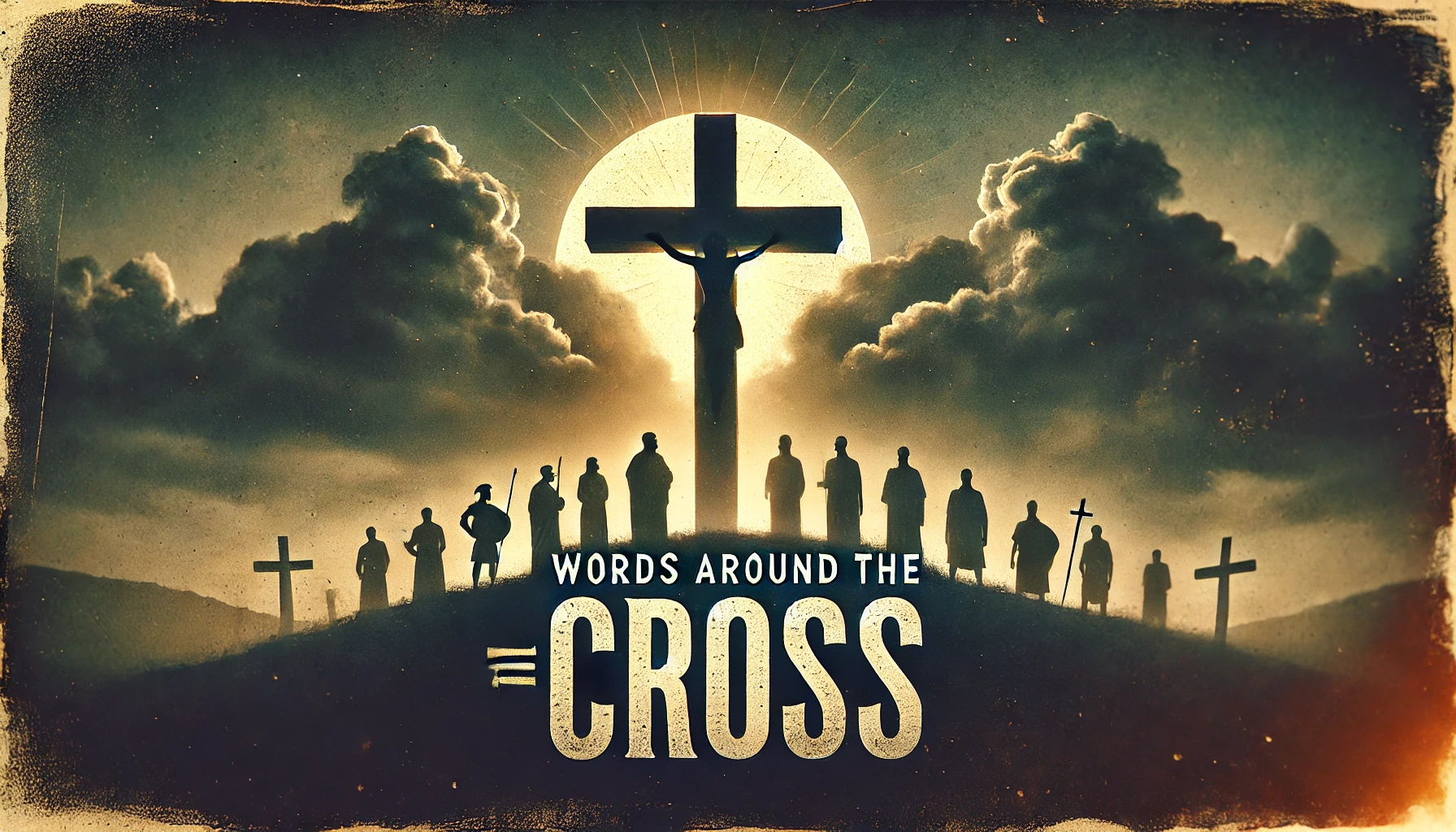
[27:46] There may be no other sentence in all Scripture that is more difficult to explain. It’s said that Martin Luther, the notable Reformation theologian, fasted and meditated for hours on this verse only to declare, “God forsaken of God! Who can understand that?” (Straus, Listen!, 68).
To fully grasp our Lord’s meaning and experience in Matthew 27, we’d have to fully grasp the mysteries of the Trinity—one God eternally existing in three equal but distinct persons. We’d have to fully grasp the mysteries of the incarnation—the union of human and divine natures in the one person of Jesus Christ. And since our earthly minds cannot comprehend such heavenly realities, we’re backed into the corner of our finitude. Simply stated, in this scene there are things we can’t fully understand.
THINGS WE CAN’T FULLY UNDERSTAND
First (and appropriately), there’s the darkness. [27:45]. Like the world appearing (Gen. 1), the sea parting (Ex. 14), the sun stopping (Josh. 10), the virgin conceiving (Matt. 1), and the dead rising (1 Cor. 15), this darkness descending can’t be explained naturally.
As its Creator hung dying on a cross, creation itself shuddered. Mark 15 tells us that Jesus’s crucifixion began around “the third hour” (about 9:00 am). And so, for hours, he writhed and squirmed in broad daylight—a spectacle for all to see.
But something dramatic changed at about noon, “the sixth hour”—the lights went out, the sky went black, and the land went dark. At the birth of Christ, the night was shattered with supernatural light as the angels announced the arrival of Messiah. But, at his death, the opposite took place: the day was interrupted by supernatural darkness as the sun hid for hours.
It’s common practice in the modern West to wear black at a funeral, depicting on the outside the darkness of mourning that’s taking place on the inside. Well, in Matthew 27, it’s as though God is putting his grief on display, draping his world in funeral attire. What a mystery! Who can fully understand the mechanics behind, the experience of, or the reason for a supernaturally caused and sustained blackout?
Second, there’s the desertion. “My God, My God, why have you forsaken me?” What’s going on here?
Jesus prays three times from the cross. We’ve already studied prayer #1: “Father, forgive them. They know not what they are doing” (Luke 23:34). Prayer #3 is still ahead in our series: “Father, into your hands I commit my spirit” (Luke 23:46).
In both prayers, Jesus calls God “Father.” Not surprising: that’s how Jesus always addresses God. “I praise You, Father … that you have hidden these things from the wise and intelligent and have revealed them to infants. Yes, Father, for this way was well-pleasing in your sight” (11:25–26). “My Father, if it is possible, let this cup pass from me” (26:39). “Now my soul has become troubled; and what shall I say, ‘Father, save me from this hour’? But for this purpose I came to this hour. Father, glorify your name” (John 12:27–28). [John 17:1, 5, 11, 21, 24, 25] When Jesus talks about God, or to God, he refers to him as “Father,” a title of inseparable intimacy.
But we’re studying prayer #2 today, and in it, Jesus doesn’t call out to his Father. He pleads with his God. Matthew records the original Aramaic, seemingly to emphasize its importance, but then translates it for his readers: “Eli, Eli! … My God, my God!”
What happened to the familial bond? Where’s the inseparable intimacy of “Father”? Something’s changed. Could it be that, at that moment, the Son and the Father were experiencing an unprecedented estrangement? Could it be that an incomprehensible cosmic chasm had opened between the two as the world’s sins were laid on Christ?
He did, after all, “die for our sins according to the Scriptures” (1 Cor. 15:3), bearing “our sins in his body on the cross” (1 Pet. 2:24). “[The Father] made him [the Son] who knew no sin to be sin on our behalf” (2 Cor. 5:21). We know that “[God’s] eyes are too pure to approve evil” (Hab. 1:13) and that Isaiah predicted that “the Lord [Yahweh] was pleased to crush him [Messiah]” (53:10). And while through all of this the Father never stopped being the Father, it seems that the Son couldn’t bear to call out to him as such: “My God, my God!”
How can God pour out wrath upon himself? How can the Son, eternally one with the Father, experience desertion from the Father? How can the “Light of the world” be swallowed up by divine darkness? How can the God-Man—he who is the source of everlasting life—taste spiritual death? What on earth (and what in heaven, for that matter) happened on that cross?
I don’t know. There are parts of this horrid scene that we simply cannot fully understand.
Now, that’s no reason to doubt. Since when do we need to understand something for it to be true? I don’t understand aerospace engineering, but I still fly. I don’t know music theory, art history, or architectural philosophy, but I sure enjoy the beauty they produce.
Just because I don’t get something doesn’t mean no one does. And just because we don’t fully understand this scene—the darkness and desertion—doesn’t mean no one does. God does. And here, we find an opportunity to practice what I pray is your habit when coming to the end of yourselves: we worship. “I don’t understand you, God, so I am in awe of you. I can’t always see how you’re at work in this world, so I pursue you! Your word puzzles me at times, so I surrender to you! I can’t get my head around the extent of your sovereignty, so I adore you.”
When we can’t fully understand God, like in Matthew 27, it’s a reminder that we’re not God, but mere worshippers of God.
THINGS THAT WE GET TO MORE FULLY UNDERSTAND
Now, that’s not to say we can’t understand anything from this scene. For sure we can. In fact, there are some things that we get to more fully understand because of it. I have five for our consideration. First, our Lord’s words help us see Scripture’s accuracy.
Jesus’s prayer is not random. He’s quoting Psalm 22, a psalm David wrote when experiencing persecution. Tell me if the contents of this psalm sound familiar: the psalmist is mocked by those standing by (22:7, 8, 12, 13), pieced through his hands and feet (22:16), his body is abused and distorted (22:14, 17), his tongue and lips are parched with thirst (22:15), his clothing is divvied up between his enemies (22:18), and his God appears to have abandoned him.
While hanging on the cross, Jesus knew that what David had truly experienced then anticipated what Messiah must truly experience now. Jesus knew that he was fulfilling that prophetic text, that it must come to pass as God said it would.
And our Lord’s posture toward Scripture is consistent throughout his life. It was common for him to point doubters back to God’s word: “Have you not read?” (Matt. 19:4), “Have you not paid attention to what God has revealed?” Time after time Jesus lights high Scripture, treating it as true and incorruptible, binding and unbreakable, understandable and powerful, good and necessary.
Some want to enjoy Jesus and dismiss this book; they want to walk with the incarnate Word while ignoring the written word. Well, Jesus didn’t leave that option open. He actually prayed for you and me: “Father, ‘sanctify them in truth; your word is truth’” (John 17:17). And on the cross Jesus was well-aware that he was fulfilling truth, that his death was highlighting God’s trustworthiness.
How can we ever trust God with our lives when we struggle to trust him with his words? How can I believe that God can save eternally if I don’t believe he can speak authoritatively? It all starts with the word of God. And we would do well to approach Scripture the way Jesus did—with desperation for its provision, submission to its statues, and certainty of its accuracy. “My God, My God, why have you forsaken me?” These words from the cross remind us of that.
Second, Matthew 27:46 helps us feel Christ’s misery. While there is mystery here in our Lord’s experience, his anguish is obvious.
If you’ve walked with God for a while you know the feeling David was describing and Jesus was enduring. We know what it is to feel forsaken by God, abandoned by God, and ignored by God. And when you know how sweet it is when he feels close, you know the fear when he feels far. It’s terrible. It’s heart-wrenching. It’s misery.
But here, on the cross, the eternal Son who had never known anything other than perfect, unfettered intimacy with his Father, experienced that separation for the first time and to an extent that we never comprehend (praise God!).
The cup of suffering he had, in the Garden, begged the Father to take from him, agonizing over it to the point of sweating blood, that cup he now drank down willingly and submissively. The author of Hebrews says, “He offered up both prayers and supplications with loud crying and tears to the One able to save Him from death” (5:7), the One he knew, and the One from whom he would be separated. This anguish made the nails feel like a massage.
The worst fear, anxiety, pain, loneliness, shame, and heartbreak that we have ever experienced or can imagine, does not compare to Christ’s misery. “My God, My God, why have you forsaken me?” helps us understand that more fully and the more we understand his misery, the more we know him. And that’s our goal! [Phil. 3:7–11]
Third, this tragic prayer helps us understand sin’s severity. Let’s face it: we live in a world that minimizes sin, renames sin, justifies sin, normalizes sin, ignores sin, and celebrates sin. As sinners we will do anything, it seems, to keep from seeing ourselves as wretched as God says we are. Some churches avoid talking about sin, naming sin, and calling out sin. Some Christians find it offensive to be shown their sin, to be called to repent of sin, and to be encouraged to battle their sin.
Simply stated, we don’t want to think of sin as a big deal. But, brother and sisters, look at the cross! Sin is a big enough deal that Christ endured all of this to pay for it. The least we can do—and I mean that: the least we can do—is treat that for which he suffered as the big deal he says it is. [Gal. 5:19–21; Rom. 6:1–7, 12–14]
Sin is severe. As it has been said, “Be killing sin or it will be killing you.” There is no neutrality. “My God, My God, why have you forsaken me?” That our precious Lord uttered those words reminds us of sin’s severity. It’s so severe that God became flesh and that flesh was put to death in order that sin may be put to death.
Fourth, these words from the cross help us understand God’s integrity. When we think of God’s faithfulness, we usually think of his faithfulness to us. And that’s wonderfully true. But God is also faithful to himself, “for he cannot deny himself” (2 Tim. 2:13). He cannot contradict his word or his character.
God is holy. He is separate from his creation and from its sinfulness. God is all-knowing, seeing all things thought, said, and done. God is just, consumed in his very being with what’s good, beautiful, and true and necessarily hates that which opposes those things. And, being a holy, all-knowing, just God, he must punish sin or else he fails to be who he is. He fails in his integrity.
But here’s the problem: God loves people but people are all sinners deserving of his wrath, a wrath that must be expressed for him to remain faithful to himself. So, how can God pardon sinners and remain just? How can he fellowship with sinners and remain holy?
The cross, that’s how. Jesus, the ultimate scapegoat, the lamb of God who takes away the sin of the world, stood condemned in your place and mine though he knew no sins of his own. By faith in him, sinners like us are declared righteous, “having now been justified by his blood, we shall be saved from the wrath of God through him” (Rom. 5:9). “In this is love, not that we loved God, but that he loved us and sent his Sonto be the propitiation for our sins” (1 John 4:10).
At the cross, God is both just and the justifier; he punished sin and paid for sin. The prayer, “My God, My God, why have you forsaken me?” helps us see God’s integrity maintained.
Fifth and finally, these dying words of Jesus Christ help us understand salvation’s availability. The misery Jesus endured was so that we don’t have to. The darkness he felt and the desertion he experienced, he experienced so that we sinners don’t have to.
Sin is a big deal. It’s severe. And God must have integrity. But, in Christ Jesus, salvation is available. In his totally accurate and authoritative word, God the faithful has promised that any sinner that places their faith in the Sinless One—the Lord Jesus Christ, the Son of God—in his sacrificial and sin-defeating death and victorious resurrection, they will be saved. Forgiveness is available. Justification is available. Reconciliation is available. Fellowship is available. Salvation is available.
There are some things in this passage we can’t fully understand. But there is also lots that we can more fully understand because of it. Perhaps the greatest of which is this: our Lord called out in a loud voice, “My God, my God, why have you forsaken me?” so that you and I will never have to utter those words, “for he himself has said, ‘I will never desert you, nor will I ever forsake you’” (Heb. 13:5). Ever. Let’s thank him for that now.

Josiah has served the Oakridge Bible Chapel family as one of its elders and one of its pastoral staff members since September 2018, before which he ministered as an associate pastor to a local congregation in the Canadian prairies. Josiah's desire is to be used by God to help equip the church for ministry, both while gathered (edification) and while scattered (evangelization). He is married to Patricia, and together they have five children—Jonah, Henry, Nathaniel, Josephine, and Benjamin.