







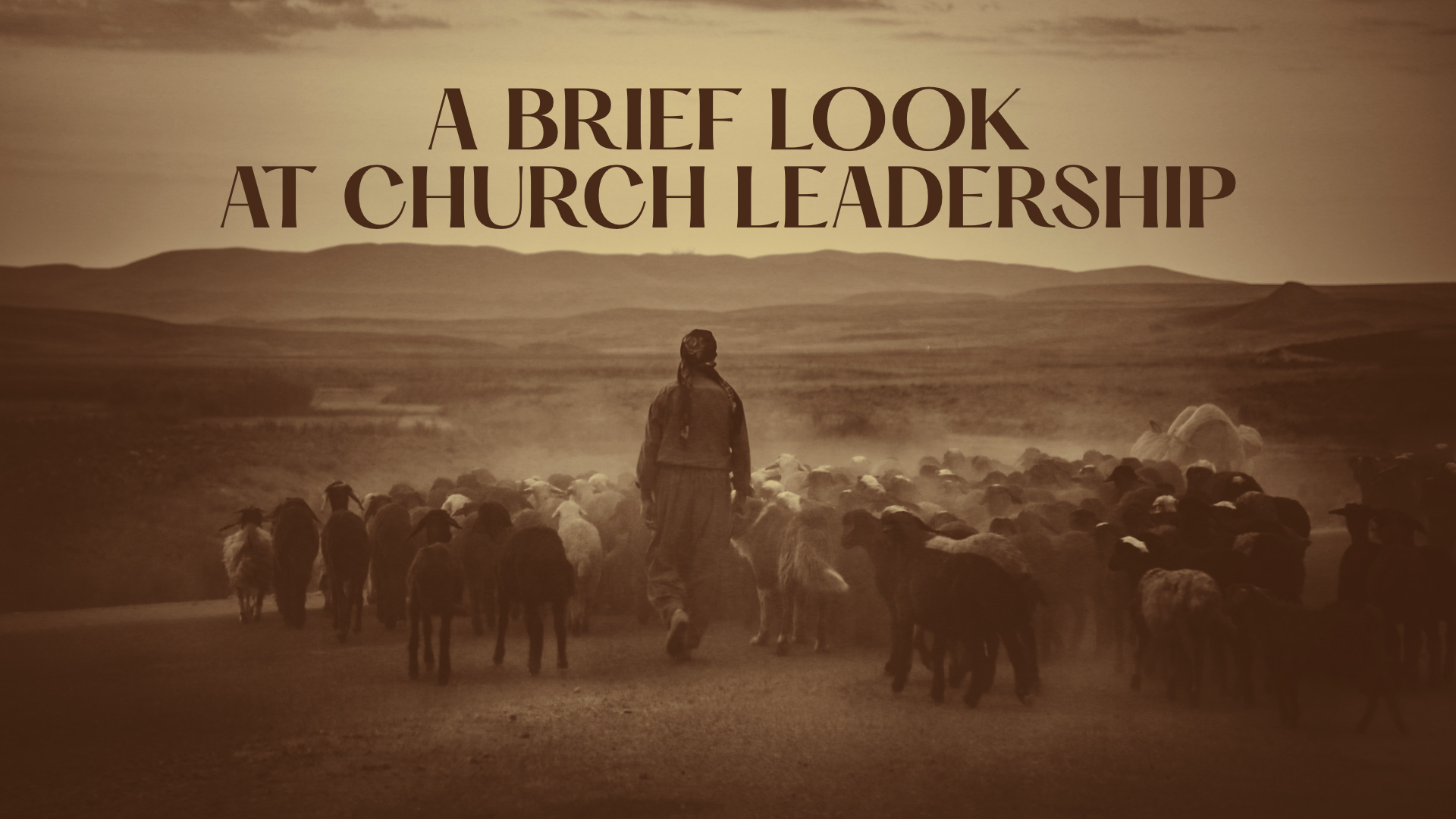
In 2020, with a virus sweeping across the globe causing fear, anger, and confusion, Oakridge Bible Chapel, like all other church families, faced a trial that tested us, strengthened us, and exposed us. God used that hardship to show our leadership areas of weakness and vulnerability.
One such area was in the leadership itself—not in quality but quantity. At the time this body had about 250 members and five elders. Almost overnight there was an influx of legitimate need: isolation, health concerns, relational tensions, spiritual warfare, and financial burdens. And as blessed as the leadership was to hear of members caring for one another, our limits were made obvious. God used that trial to show us that to shepherd God’s people the way God’s word demands five was not enough. And so, in 2020, we started praying: “Lord, raise up leaders from within. Send us help, shepherds of your choosing.”
And we began to see the Lord answer those prayers. In 2022 we added two new elders and this morning we get to add two more. But, as I thought about this answer to prayer, I was reminded that many who now call Oakridge “home” are relatively recent additions, having come from other countries, cities, churches, and backgrounds, and may not know much about how a church is led, what an elder is, and what elders do. And, for those who are familiar, a refresher wouldn’t hurt.
SERMON MANUSCRIPT
James opens his letter by declaring the usefulness of hardship in the Christian life. It’s trials, he writes, that serve as the gymnasium in which faith is trained, endurance is grown, and maturation is produced.
And what Scripture declares infallibly, we know experientially, don’t we? Times of trouble have a way of removing any pretence of self-sufficiency and invisibility. They expose vulnerability and highlight deficiency, apathy, and sometimes, stupidity.
The last three years have given many of us an unwanted membership to this unpleasant gym. There’s been lots of opportunity for anxiety, loneliness, tension, aggression, sadness, stress, mourning, and regret.
In 2020, with a virus sweeping across the globe causing fear, anger, and confusion, Oakridge Bible Chapel, like all other church families, faced a trial that tested us, strengthened us, and exposed us. God used that hardship to show our leadership areas of weakness and vulnerability.
One such area was in the leadership itself—not in quality but quantity. At the time this body had about 250 members and five elders. Almost overnight there was an influx of legitimate need: isolation, health concerns, relational tensions, spiritual warfare, and financial burdens. And as blessed as the leadership was to hear of members caring for one another, our limits were made obvious. God used that trial to show us that to shepherd God’s people the way God’s word demands five was not enough. And so, in 2020, we started praying: “Lord, raise up leaders from within. Send us help, shepherds of your choosing.”
And we began to see the Lord answer those prayers. In 2022 we added two new elders and this morning we get to add two more. But, as I thought about this answer to prayer, I was reminded that many who now call Oakridge “home” are relatively recent additions, having come from other countries, cities, churches, and backgrounds, and may not know much about how a church is led, what an elder is, and what elders do. And, for those who are familiar, a refresher wouldn’t hurt.
So, I want to look at a passage this morning that helps us do that. This won’t be an exhaustive study on church leadership, but a snapshot to consider and, for those who may be new to Oakridge, a peek into how our assembly is structured and what is expected of those who lead.
Turn to Acts 20. I want to read a chunk of this chapter but focus in on verses 28 through 32 where we’ll notice a few things about the nature of church leadership, the job of church leadership, and then the expected response to church leadership from God’s people. So, its nature, its job, and our response. Acts 20, starting at verse 13, in which Paul is on his third missionary journey.
The nature of church leadership
In the midst of this emotional farewell, we catch a glimpse of the nature of church leadership; what it’s like, who’s involved, and how they get the job. Let me point out four.
First, church leadership is teamwork. In verse 17, Paul called to him the elders (plural) of the church (singular) in Ephesus. One assembly, multiple elders. [see also 11:29–30; 14:23; 15:2] You get the point: there’s a plurality of elders in any given church, including Oakridge.
Every team has many members, all with different skillsets that compliment one another and different weakness that are muted in the crowd. They also can’t all be everywhere at once but, together, cover more area. So it is with a plurality in church leadership. It’s teamwork.
Second, church leadership is provided. [v. 28] Leadership in a church is not developed the same way it is in the corporate world. In fact, many of the qualities sought after in leaders outside the church are antithetical to those for leaders inside the church. Charisma, being articulate, and the ability to draw a crowd mean nothing if they aren’t backed up by godliness, humility, and Christ-centred devotion. As God told Samuel about Saul, in 1 Sam 16:7.
Many churches are obsessed with building up leaders, developing leaders, launching leaders. It’s such a worldly activity. We are to make disciples, edify disciples, send out disciples—those who, like he whom they follow, make themselves less and lay themselves down.
I read of a young woman who wanted to go to college but was disappointed to read the question on the application that asked, “Are you a leader?” Being both honest and conscientious, she wrote, “No,” and returned the application, expecting the worst. To her surprise, she received this response: “Dear Applicant: A study of the application forms reveals that this year our college will have 1,452 new leaders. We are accepting you because we feel it is imperative that they have at least one follower.”
We aren’t in the business of making leaders, but disciples, followers. It’s God who raises up his leaders, his ministers, his Sunday School teachers, his musicians, his greeters, his servants, his givers. It’s God who raises up elders, overseers, shepherds. It’s our job to recognize them when he does, to encourage them as he’s doing it, and to commission them into service. Church leadership is provided.
Third, church leadership is demanding. Verse 28 commands the elders to be on guard for themselves and the flock. Jesus often used this word as a warning: “Beware of the false prophets, beware of the leaven, beware of the scribes.” Paul uses it in 1 Timothy 3:8.
Back in Acts 20, Paul’s telling these elders to beware, be addicted and obsessed with with health and safety of God’s people. Oh, and just to add some pressure, remember the flock is the church of God which he purchased with his own blood (v. 28b). Handle with care.
[v. 31] Keep watch, ever vigilant and awake like Paul or like a trained detective on an important stakeout—one nod-off could mean catastrophe. No wonder God prescribes a plurality, a team of elders he raises up. It’s demanding.
Finally, it’s humiliating. [v. 32a] After all that admonition, Paul simply has to give them back to God—he’s going to have to equip and empower them because in and of themselves, they can do nothing. [John 15:5]
The church leader who thinks they have something to offer besides their surrender to the Lord is dangerous. The leader who thinks they are God’s gift to the church is actually the opposite.
No, the leaders that God provides to oversee his people are those who know they must be commended back to the Lord, that their effectiveness as shepherds and their personal sanctification all depends on their submission to the word of God, that which is inspired and useful [2 Tim 3:16–17]. This is a humiliating realization, but an important one.
As the great hymn says: “Nothing in my hand I bring / Simply to thy cross I cling / Naked, come to thee for dress / Helpless look to thee for grace / Foul, I to the fountain fly / Wash me, Savior, or I die.”
This is true for every follower of Jesus, but even more for those who care for followers of Jesus, who stand with Paul and, with trepidation, say “follow me as I follow Christ.” It’s beautifully humiliating.
While not exhaustive, this text provides a peek at the nature of church leadership. It’s teamwork, it’s provided, it’s demanding, and it’s humiliating.
The job of church leadership
Now, a related but distinct issue is the job of church leadership. What are they supposed to be doing? Well, if we were to gather all the biblical data to create a job description for an elder/overseer/pastor, it would fall into three main categories, all of which are found in Acts 20.
First, an elder’s job is to feed the church. [vv. 20–21, 24b, 27, 32] If it’s the word that builds up the elders then it’s the word that builds up God’s people. [Tim 5:17] And this isn’t a novel for NT leaders of God’s people. It was the same in the OT. [Ezek 34:8–10] Failure to feed.
As a church family we want to take in nutrient-rich food that helps us grow strong, stay healthy, remain energetic and resilient. And that’s the word of God. It doesn’t matter how long someone has been a Christian, it doesn’t matter how articulate they are, they have nothing to offer of eternal value apart from God’s eternal word.
And this should permeate everything we do—the songs we sing, the prayers we pray, the sermons we preach, the counselling we offer, the care we provide. It’s the elder’s job to feed the church and there’s only one thing that should be on the menu: his inerrant, authoritative, and sufficient word. An elder’s job is to feed the church.
Second, an elder’s job is to lead the church. Praise God he leads us, his sheep. [Psa 23:1–4] Elders are to mimic God’s leadership, leading God’s people in the safest, wisest paths. [28a, 31b; 1 Pet 5:1–4]
Church leadership is to prayerfully, dependently, lead God’s people toward maturity, godliness, spiritual safety, and refreshment. They are to lead God’s people in faithfulness to God’s word even if that direction seems as archaic, old fashioned, out-of-touch, or offensive to the world around us. This is the direction we’re going, this is the decision we’re making, for no other reason, perhaps, other than God said so. And that’s enough for us. An elder’s job is to lead the church.
Finally, an elder’s job is to guard the church. [vv. 28a, 29–30] A great enemy to sheep is the wolf and, according to Paul, they are on the hunt. They are outside and inside the assembly. They spread lies that, at times, sound good, but draw unsuspecting saints away from safety. They cause dissension, disunity, and discontentment. They may seem level-headed, well-read, and pastoral, but they are savage and they will not spare the flock. They’re out for blood.
It’s the elders job to guard the church from these killers. Elders are alert, listening for whispers of false teaching and dangerous ideology, and they deal with it.
This is the job of church leadership: feed, lead, and guard the church.
Our response to church leadership
Now I want to close this brief look at church leadership by suggesting our response to church leadership. We’ve reviewed its nature and its job, but what are we do do? How are we to respond to our leaders?
First, know them. As we’ve seen today, elders/overseers/pastors are given to us by God for our good. It may be a good first response to become familiar with them. To speak with them, pray with them, be known by them. And this is true whether you’re new to the church or not. Get to know those God has given to you for your good.
From a shepherd’s point of view, it’s easier to feed, lead, and guard people I know. Help us do that. If you aren’t signed up yet for the photo directory, maybe that’s where to start. In that directory there’s a list of those in leadership and all their contact information. Get to know them. Let them get to know you.
Second, submit to them. [Heb 13:17] We aren’t called to submit to the leaders that God has put in place because they’re infallible. We submit ourselves to leaders, live governments, trusting in God’s providence, and as unto Christ himself.
Submitting to church leadership doesn’t mean silence or tyranny. It means understanding how God has designed his body to operate, giving the benefit of the doubt, and knowing that we’re most like our Lord Jesus when we lay ourselves down before imperfect leadership as unto the Father. Submission is more a posture of the heart than it is any individual action. While it’s one of the most counter-cultural things there is today, our response to church leadership is to be one of submission.
Third, call for them. [Jas 5:14] Notice in that verse that it’s the sick person who initiates the invitation to the elders. And this happens in our assembly—not as often as we may like, but it does.
But you don’t have to wait until you’re sick either. If you’re wrestling with doubts, fears, or faith, call the elders. If you have needs that you need help meeting, call the elders. If you have questions about Scripture, church structure and activities, or a longing to serve, call the elders. Or, hey, if you’re excited and want to share what the Lord is doing in your life, call the elders. Call for them.
Finally, pray for them. Obviously, church leadership is made up of sinners who battle with the world, the flesh, and the devil like everyone else. They carry a burden, willingly and joyfully, but truly. They will one day give an account for every soul they were entrusted with. Pray for them. Pray for strength, wisdom beyond themselves, humility, grace, courage, conviction, and compassion. Essentially, pray for Christ’s character in them.
It’s been said that every church is the lengthening shadow of its leaders, and we could quickly add: for good or for ill. Pray for your leaders, that this shadow may grow to increasingly be Christ’s.

Josiah has served the Oakridge Bible Chapel family as one of its elders and one of its pastoral staff members since September 2018, before which he ministered as an associate pastor to a local congregation in the Canadian prairies. Josiah's desire is to be used by God to help equip the church for ministry, both while gathered (edification) and while scattered (evangelization). He is married to Patricia, and together they have five children—Jonah, Henry, Nathaniel, Josephine, and Benjamin.