







Welcome to another installment of “Well That’s Interesting” (you can find the first post with a detailed explanation of the series here, or bookmark this page to keep track of the whole series).
I’ve wanted to do a post on Genesis for a while now, but with so many great and interesting narratives to choose from, I struggled to pick one. But what eventually sold me on today’s passage was not just the story itself (one that many of us might not have heard since our Sunday School days), but some intriguing content around the passage as well. So while the focus of the post today is the story of the Tower of Babel from Genesis 11, we are also going to be looking at some of the excellent wordsmithing surrounding this short passage, from chapters 10 and 12 as well.
Setting the Scene
Now all the earth used the same language and the same words. 2 And it came about, as they journeyed east, that they found a plain in the land of Shinar and settled there. 3 Then they said to one another, “Come, let’s make bricks and fire them thoroughly.” And they used brick for stone, and they used tar for mortar. 4 And they said, “Come, let’s build ourselves a city, and a tower whose top will reach into heaven, and let’s make a name for ourselves; otherwise we will be scattered abroad over the face of all the earth.” 5 Now the Lord came down to see the city and the tower which the men had built. 6 And the Lord said, “Behold, they are one people, and they all have the same language. And this is what they have started to do, and now nothing which they plan to do will be impossible for them. 7 Come, let Us go down and there confuse their language, so that they will not understand one another’s speech.” 8 So the Lord scattered them abroad from there over the face of all the earth; and they stopped building the city. 9 Therefore it was named Babel, because there the Lord confused the language of all the earth; and from there the Lord scattered them abroad over the face of all the earth.
Genesis 11:1–9 NASB
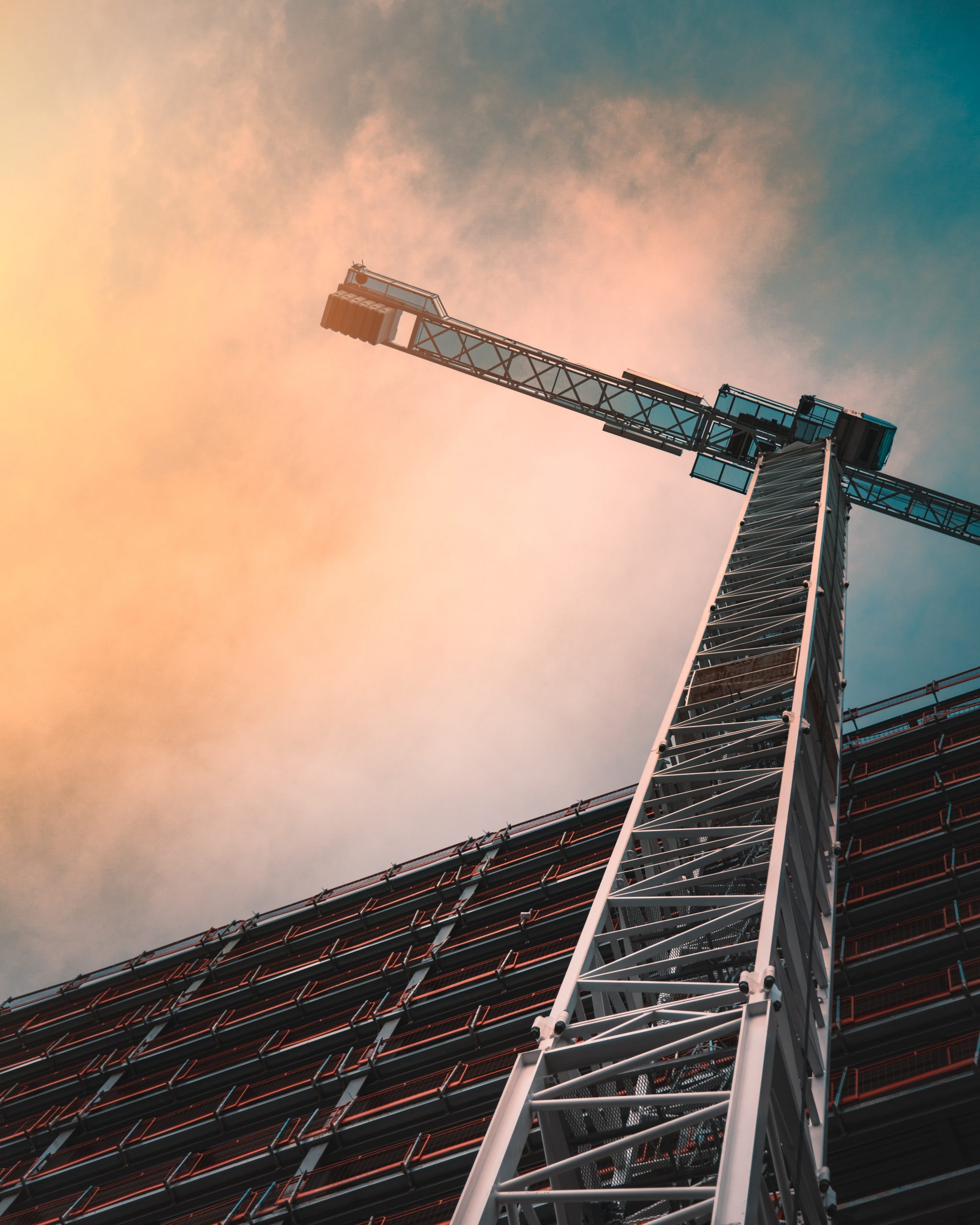
I sometimes wonder if the reason towers are so often a symbol of foreboding negativity in fictional works has anything to do with influence from this story. It’s a fascinating tale, set in a unique time in humanity’s history, as the first verse tells us that everyone used the same language. What I find even more interesting is the phraseology of verse 2, “as they journeyed east” (emphasis mine), which connects back to the subject, “all the earth” in verse 1. It’s hard to imagine all of humanity living and operating as one unit, but it’s helpful to remember that, according to the timing of the genealogies surrounding it, this event likely took place only around 100 years after the flood, when all of humanity was erased and rebuilt from 8 people.
Speaking of the flood, it is important for us to return to some of those details to fully appreciate why the building of a towering city was such a big deal. When Noah and his sons and their families left the ark, God commanded them “Be fruitful and multiply, and fill the earth” (9:1; emphasis mine). But you’ll notice at the end of 11:2, “all the earth” has decided to “settle” in a “plain in the land of Shinar”. So while they may have had the “fruitful and multiply” part covered, it’s pretty hard to “fill the earth” when you have settled in one place. So already we can see, this tower is on a shaky footing, as humanity once again shows no regard for what God has commanded.
The Motivation
Next, we need to consider the people’s motivation for building in the first place.
“Come, let’s build ourselves a city, and a tower whose top will reach into heaven, and let’s make a name for ourselves; otherwise we will be scattered abroad over the face of all the earth.”
Genesis 11:4 NASB
I notice three different purpose statements in this verse, each with its own issues. First is the idea of a tower that will “reach into heaven”. While it’s possible this is just hyperbole for very high, it’s likely the people’s intention was to elevate themselves to the level of God; to reach up to God and thus be like him (cf. Gen. 3:5). This is further evidenced by the second motivation: to “make a name for ourselves”, or put simply: pride. It wasn’t about accomplishing something great for God’s glory, or to worship him; but to make themselves known. The irony here, of course, is that in some ways they accomplished this aspect of their project, albeit with the opposite type of attention they were hoping for. They will forever be remembered in the negative, as the people who tried to build a tower to heavens.
It is this aspect of the building of the tower that I find find most relatable or at least applicable in the world of today. So much striving exists in our culture to be someone, to leave your mark on the world, or to “make a name for yourself” to put it in Genesis 11 terms. While I’m sure this has always been a struggle in humanity (case in point, here with the tower), it seems as though it is even more prevalent, or at the very least, more accessible than ever before. In the age of social media, influencers, presenting your best self, and just the sheer connectedness of the internet, it can be easy to think we’re just one unique post away from catching our big break; and to chase after that reality with intensity. Now, I’m not at all saying it’s wrong to be successful or influential, or to seek those things. But I think it is important and helpful for us to continually check our hearts and ask why? For what purpose? Is it for God’s glory, or to make a name for ourselves?
Then of course there is the third motivation: to prevent being “scatted abroad over the face of all the earth”. I don’t think I really need to say much about this one, when I’ve already mentioned above that what they are resisting here is in fact the very directive God gave to them.
The Result
Despite the people’s pride, arrogance, and disobedience, they were unable to finish the task they started. To drive the point home, I appreciate in verses 5 and 7 that, for all their ambition to reach up to heaven, God “came down” to see what they were building. They may have gotten his attention, but they were nowhere close to achieving their misguided, and ultimately unachievable, goal. In between, we have verse 6, where we are reminded of a potential danger of ambition: that we can be so focused on and enamored with ourselves that we become consumed with what we can accomplish. Again, this is not to say that ambition in and of itself is bad, but rather a reminder to be cautious and aware of what can happen when we fixate on our own abilities and goals rather than on doing God’s will God’s way.
The result in the case of our story today is that God confuses the people with different languages so that they have no choice but to do what they were originally tasked with, and scatter across the earth. Considering the arrogance and outrageousness of their disobedience, this approach seems incredibly gracious. It reminds me of the parent who, before going to discipline, redirects their distracted child to the appropriate activity. Again, I can’t help but see a warning here about how easy it is for our own ambitions to distract us and get in the way of what God desires. I am so thankful for a God who is gracious even when I get in my own way or struggle with staying focused on the task at hand. Yet I also pray that by his strength, not my own, I will stay attentive and responsive to that which he has called me.
Around the Tower
I said that before we finished today I wanted to highlight some interesting things from writings that surround our passage. These points might not be as extensive or fleshed out as the rest of the study, but they stood out, so I wanted to draw some attention to them.
First of all, chronologically, the story of the Tower of Babel in chapter 11 takes place somewhere in the midst of chapter 10. It is most likely what is being referred to in 10:25 where we read:
Two sons were born to Eber; the name of the one was Peleg [which means “division”], for in his days the earth was divided; and his brother’s name was Joktan.
Genesis 10:25 NASB
So if that is the case, why didn’t the author of Genesis tell the story of Babel before going into the genealogy of chapter 10? Some potential clarity comes when looking at what comes after the Babel story: another genealogy. So by laying it out this way, we instead have in interesting pattern: the genealogy of Noah’s descendants leading to the disappointing Tower of Babel, followed by a further genealogy of Noah’s son Shem, which leads into the story of Abram and the promises of blessings to come. What makes this even more intriguing is that both genealogies have an overlap, in the period from Shem to Eber, who I mentioned above. Where chapter 10 follows the descendants of Joktan to the story of division (Babel), 11 follows the line of his brother Peleg (which means division) to Abram, who would be the father of many nations, and of the seed who would be a blessing to the world.
To take this just a couple steps further: if you start reading into the account of Abram in chapter 12, you might notice that one of God’s promises to Abram is: “I will bless you, and make your name great” (12:2, emphasis mine), which is shockingly similar to the motivation of the tower builders in 11:4. And even further: as I mentioned before, the genealogies in both chapters 10 and 11 make a point of overlapping with Shem’s descendants. Shem, whose name is literally the same as the Hebrew word used in both 11:4 and 12:2 for making a “name” great. Isn’t that enthralling?
Again, my purpose wasn’t to go into all the details here, but rather just to point out some very interesting aspects of the way this section of Genesis was written. As I’ve sought to draw attention to with this blog from the start, the Bible is full of fascinating literary patterns and devices if you take the time to look.
Why Does it Matter?
This is my 21st post in this series, and as my study and writing style progress, I’m finding myself including more of the “why” within the body of the post itself, and seeing less use for a defined conclusion and application section. So from here on out, you may notice some weeks that are lacking a “Why Does It Matter?” paragraph, and my hope on those weeks is that the rest of the post, and arguably the text itself, will make clear enough why it is relevant. Today is one such day. Let us reflect on this fascinating story, and the way the narrative around it was crafted, responding with prayer that God would guard and guide our ambitions, and gratitude for the care and attention he has put into his perfect word!

Andrew is the Associate Pastor at Oakridge Bible Chapel. He grew up in a Christian home, and spent time serving in churches of varying sizes and denominations before landing at Oakridge with his wife in 2017. He likes to verbally process theological issues he finds challenging and is always ready to learn something new. He has a passion for teaching the Bible, and seeking to explain confusing passages in a clear way, preferably with a good illustration or two.