







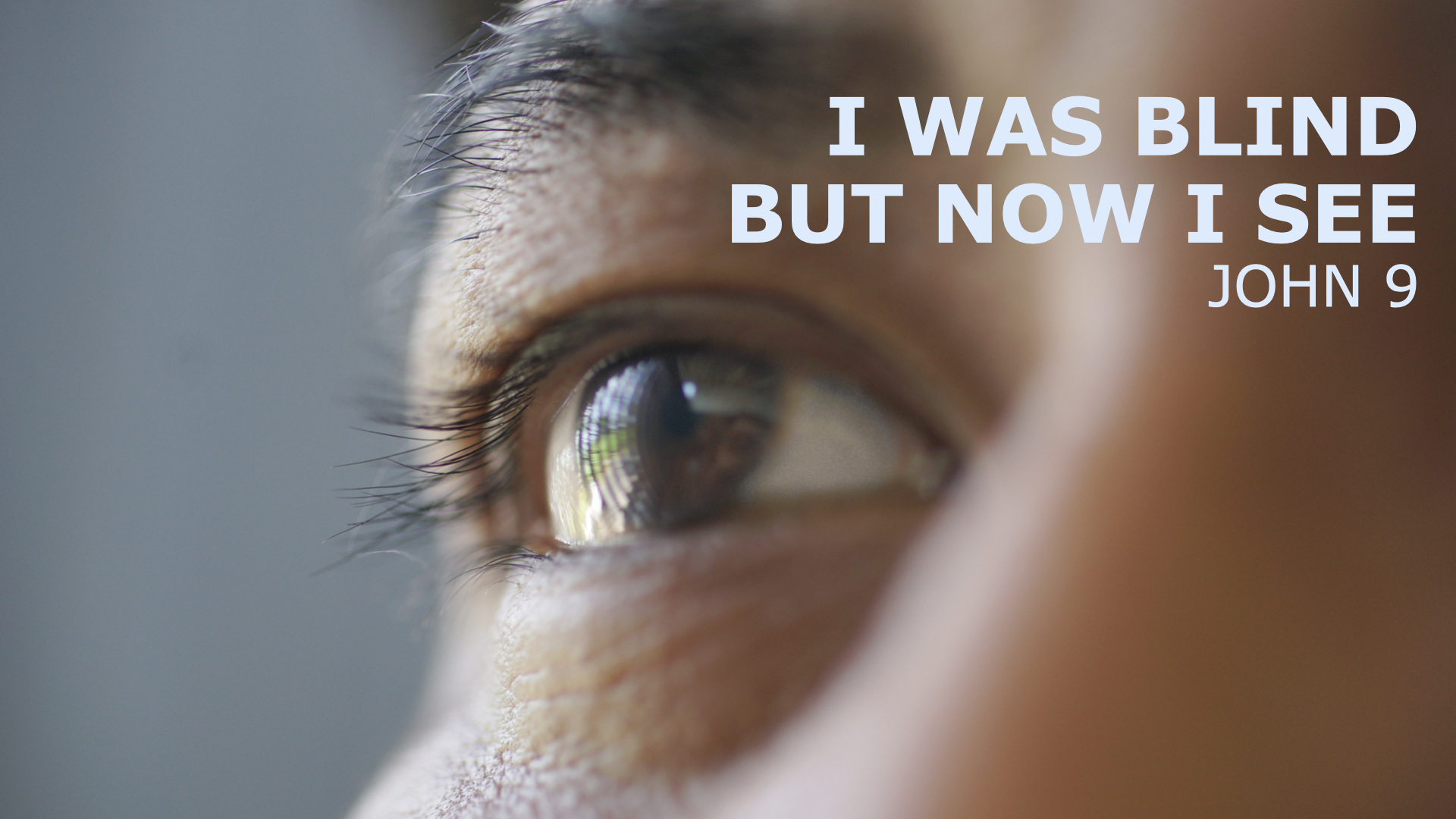
What do you think about when you think about God’s sovereignty? It’s one of those words we use a lot in the church, and yet even for those of us who understand it, or think we understand it, it can be hard to accept or appreciate it. The topic of God’s sovereignty touches on some of the biggest concerns people have with believing in or following Jesus, whether in or outside the church.
What does it mean when people say that God is “in control”? How could a good God allow suffering? Why is God allowing me to go through these circumstances? All of these questions connect back to a proper understanding of sovereignty.
Over the next two weeks we’re certainly not going to answer all of them, but we are going to look at a few different stories of people in the Bible who had events happen in their lives beyond their control—situations of suffering and hardship—and through how they responded to these events we’ll hopefully together be able to grasp a better picture and understanding of what it means for God to be sovereign in the midst of it all.
SERMON MANUSCRIPT
A few weeks ago I was invited to be the guest speaker for a youth snow camp weekend up north, and the theme of the weekend was all about God’s sovereignty. It’s one of those words we use a lot in the church, and yet even for those of us who understand it, or think we understand it, it can be hard to accept or appreciate it.
As I was preparing for this Sunday and next, the concept of God’s sovereignty came back to me and I thought it could be helpful to take what I had studied for and prepared for that weekend and use parts of it to hopefully bless this congregation as well, recognizing that God’s sovereignty touches on some of the biggest concerns people have with believing in or following Jesus, whether in or outside the church.
What does it mean when people say that God is “in control”? How could a good God allow suffering? Why is God allowing me to go through these circumstances? All of these questions connect back to a proper understanding of sovereignty.
Over the next two weeks we’re certainly not going to answer all of them, but we are going to look at a few different stories of people in the Bible who had events happen in their lives beyond their control—situations of suffering and hardship—and through how they responded to these events we’ll hopefully together be able to grasp a better picture and understanding of what it means for God to be sovereign in the midst of it all.
If you have a bible with you I’m going to invite you to turn to the book of John chapter 9. John 9 contains one of my favourite bible stories, and while we aren’t going to read the entire chapter today, since that would take most of our time, we are going to attempt to get through most of the story. Now, I know I got you to turn there already, but before we dive in it’s always important to establish the context. Just like you wouldn’t pick up a novel and start reading in a random chapter, if we’re going to be studying the bible, we want to know what is going on around the passage we’re reading.
At this point in the book, Jesus has been going around doing ministry with his followers, his disciples, back and forth between Jerusalem and Galilee. He’s been preaching and teaching and doing all sorts of incredible signs and miracles like healing people and feeding crowds. If you’ve attended the adult Sunday School class on Sunday mornings before service the past few weeks, Nate just went through a series on the signs in John. Hopefully this won’t be too much of a recap for you folks!
While these signs drew many more followers to him, it also roused some opposition. As I’m sure you’ll remember from our series in Matthew, at the time, Jewish society, while under the oppressive thumb of the Roman Empire, was largely led by religious leaders, priests, and rabbis. In particular, the group known as the Pharisees were not big fans of Jesus. In fact, after he started doing things like healing on the Jewish day of rest, the Sabbath; and after he started referring to himself as God’s Son, thus putting himself on the same level as God, John tells us they went from being annoyed to actively trying to find a way to justify killing him without drawing hate and rebellion from all his followers.
It is into this reality that we start into chapter 9.
The Miracle
[Read John 9:1–7]
We could stop there and have a fascinating story, because there’s so much in there that is interesting. So many questions we could ask: Why is the first assumption of the disciples that this man is blind due to sin? What does Jesus mean when he says “it was so that the works of God might be displayed in him”? What does Jesus mean when he says “night is coming, when no one can work”? Why make mud? Why use spit to make said mud? Why require the guy go somewhere specific to wash? There’s a lot there, and we’re not gonna solve it all today. But let’s start with verse [2]
We know that sin is that which separates us from God. It’s anything that is disobedient or opposed to what God said is good; that which God has commanded. At this time it was a common perception that if someone had a physical ailment of some sort, it was because they were particularly sinful. Or if someone was born with a physical ailment, it was because their parents were particularly sinful. The disciples know that Jesus knows what’s up, so they asked him: who screwed up. This guy or his parents?
And I think I’ve talked about this before in a previous sermon, but before we move on too far, notice that Jesus doesn’t correct their assumption. While he says that the man’s blindness is not due to his own sin or his parents’ sin, he doesn’t correct the idea that people sometimes face physical consequences for their sin. In fact, there are numerous points even in the New Testament, after the death and resurrection of Jesus, when people, even Christians, face real, physical consequences for sin.
And while I am definitely not saying that if you have gone through suffering or are going through suffering it is because you have brought it on yourself with sin, I think it is something interesting to consider as we think about the theme of God’s sovereignty. So often when we suffer we ask the big questions: where is God? How could a good God allow this? Why is this happening? Does God even care about me? On the flip side, how often do we even at least consider the possibility that our sin can bring earthly consequences and that maybe God isn’t the one to blame? Just something to think about.
Alas, in this man’s case, his ailment was not a direct result of a specific sin, it wasn’t a punishment or discipline, but rather an effect of the brokenness and suffering that mars all of creation in a sin-stained world. A suffering that was allowed, not caused by, but allowed by a sovereign God for a specific purpose. [3] Now, some might still look at this story and try to find a way to villainize God. “If God is willing to allow such suffering, it’s the same as if he caused it himself” some have said.
But that shows a misunderstanding of sin and its effects and consequences in the world. While this man may not have caused his own suffering with a specific, terrible sin, he was still far from perfect. How do I know this? Because we are all far from perfect. In comparison with the perfection of God, none of us stands a chance. And if we were to make a list of all the sin each and every one of us has committed, even the “good” people, we’d see very quickly that every one of us deserves to be punished and disciplined for our actions. Romans 6:23 makes clear that what all of us truly deserve, as sinners, is death.
The fact that any of us go through seasons where we aren’t suffering is truly a gracious provision from a perfect God who in all actuality ought to be disgusted by us and our actions. And we see some of that gracious provision in this story. We see Jesus step in to this man’s life and offer him something no one else has ever been able to offer: sight. A work of God displayed miraculously in his life. An interaction with Jesus and a miracle he never would have witnessed or experienced if he hadn’t been allowed to suffer in the first place.
This leads me to something I’m going to repeat a few times over the next two weeks as we seek to understand and appreciate God’s sovereignty. Sometimes God allows things we don’t understand to accomplish something greater than we can imagine.
The Confusion
Well as you can imagine, a man who was blind his whole life suddenly receiving sight caused quite the commotion. People who recognized him as the blind beggar on the street corner were very confused to see him walking about, clearly able to see.
[Read John 9:8–12]
Notice in particular the way he refers to Jesus. Remember, he hasn’t even seen him at this point, he just heard his voice and followed his instructions. All this confusion inevitably reached the ears of the Pharisees, who were concerned not so much about the healing itself, but how and when it was done.
[Read John 9:13–25]
The Pharisees already had Jesus in their crosshairs, and this just increased their fervour. Because once again they had clear testimony that he had healed someone on the Sabbath, which they deemed to be disobedient to God’s law. And so they are frustrated that this Jesus guy isn’t following their interpretation of the Law, and yet also confused: if he’s empowered by God, why would he break the Sabbath, but if he’s not from God, how could he do such a miracle? To make it even more complex, we see later in the text that there were stories of blind people receiving sight, but never someone who had been blind from birth! (vv. 32) The only other option that makes sense to them is that the man was lying and he was never blind in the first place. It was all an elaborate ruse!
So they find his parents to question them to see if the story holds up, no doubt looking for someone to slip. Yet his parents are very concise and particular with their responses. Why? They were terrified. John gives us this little insight: [22] It’s here that we get a better glimpse into the immense socio-political power that the Pharisees had. To excommunicate someone from the synagogue would have meant total isolation and ostracization from their culture.
It’s almost like when a person who has committed certain crimes gets released from prison and a warning goes out and posters go up around the neighbourhood to make everyone aware “an offender is in our midst. Be cautious.” It would have had serious implications for their family, their reputation, their religion, perhaps even their work, their livelihood, and their acceptance in society. It’s no wonder they were afraid! So they say what they have to, even basically throwing their son under the bus then they get outta there!
Getting nowhere with the parents, they get the healed man back in and almost try to bully him into a confession: [24] which is basically: “if you claim to care at all about God you’ll admit Jesus is a sinner”, or “if you don’t, we’ll have to start questioning your faith and loyalty” which we already discussed, would have disastrous consequences. Yet the man responds with honestly one of my favourite verses in the whole Bible [25].
You might be asking, “Andrew what is so special about this verse?” What I love is that, faced with confusion and questions, even opposition and borderline threats, the man responds with truth, humility, and a simple explanation of his experience with Jesus. While it’s good to learn, to know, to understand; we don’t need to have all the answers all the time.
I’m sure this man couldn’t articulate all the hows and whys of his healing. He didn’t really know who Jesus was (“the man who is called Jesus”, “a prophet”) we don’t read at this point about him having a particularly strong faith or a belief in Jesus as the Messiah (promised savior and king the Jewish people were waiting for). In fact at this point, we as the reader have more information than he did, in that God allowed certain circumstances in his life specifically for displaying a miraculous work of God’s power in him. We know that, but he didn’t.
He didn’t have all the answers, yet he faithfully shared his story, his experience with Jesus. Sometimes God allows things we don’t understand to accomplish something greater than we can imagine.
If you’re here today and you’ve had an experience or encounter with Jesus; if he’s changed or impacted your life in any way, even if it seems small to you, I encourage you to share that experience with others around you. Maybe that’s with a family member or friend, a co-worker or a neighbour. Or maybe it’s even to encourage other people in this room who might be struggling! As we see in this story, people might not believe you, or they might not care. But no one can take away your experience, and it might just have a bigger impact than you realize.
If you’re here today and you haven’t had an experience with Jesus; maybe you’re new to all this Bible and Christian language, or maybe you’ve heard it for years but struggle to believe. I’d encourage you to ask someone, maybe even multiple people, about their experiences. You can talk to myself, or the other staff, or the elders or deacons at the church. Or ask the person who invited you here, or honestly, the majority of the people here. I’m confident you’ll find someone who is willing to share their story with you of what they’ve experienced with Jesus and why they believe what they believe. But if you want it to be beneficial, don’t go into it like the Pharisees did here, trying to disprove or dismiss, but approach it humbly as one just seeking to listen and learn.
The Understanding
Well, the Pharisees don’t like the man’s response, especially when he starts trying to explain the logical inconsistencies in their line of questioning, and eventually they get mad enough that they do what his parents feared and kick him out of the synagogue. At this point, he has every reason, from a human perspective at least, to be frustrated, afraid, upset, even angry. Sure, he has his sight, but he now has to face a very uncertain future ostracized from his society. And I don’t know about you, but even when good things happen, it can be easy to focus on the negatives and downsides and difficulties.
But instead, we see a very different response.
[[Read John 9:35–38]]
He asks, believes, and worships. You’ll notice Jesus uses this interesting term “Son of Man” which we remember from our study on Matthew is a title that is first used in the book of Daniel referring to the coming Messiah. So, Jesus is asking if the man believes in the “man from God”, the Messiah. The man responds, asking for clarity, but with purpose: “that I may believe in him”.
Now, “believe” here isn’t just acknowledging existence. It’s not “I believe in trees” because obviously I’ve seen trees and know about trees. It’s also not just about wishful thinking or educated assumptions like “I believe it’s going to snow more” because the weather-report says so or it feels cold and is cloudy. In this case belief is almost more associated with trust. Like I believe you that what you’re saying is true and that you are who you say you are. It’s almost like the difference between “do you think this person is strong” and “do you trust them to carry you out of a burning building if you break your ankle”. It’s really no less here than Jesus presenting his identity as savior messiah to the man and the man saying “yes. I trust that’s you and you have the power to do what you say you’ll do”.
That’s why I love that the example here is someone who was born blind, because it’s a helpful illustration for the helplessness we face in this life. That’s not to say that someone blind is helpless, please don’t hear me wrong! But rather, in most cases, as far as I’m aware, a person born blind is helpless to solve their own affliction. There isn’t anything they can do in-and-of-themselves to make themselves see, to open their eyes. They can’t just work harder, dream bigger, will themselves to sight.
Just like this man in John 9. He needed to rely on someone else to truly see, physically, and really spiritually. He ultimately had to place at least a little bit of trust in Jesus to go and do what he said by washing the mud off in the pool. And that eventually led to him declaring belief in Jesus as Messiah.
A few weeks ago at Treehouse, and then at a ministry weekend up north I explained it with an analogy involving a ball, a cup, and a blindfold. I got a volunteer from those listening and I blindfolded them (don’t worry I won’t do that today) and gave them 3 ping pong balls, and three rounds with different stipulations, but all with the goal of getting a ball in the cup.
The first round was simple. I placed the cup on the opposite end of the platform where they could see it, put on the blindfold, spun them around, and asked them to throw a ball into the cup. As expected, the ball went off in completely the wrong direction. Nowhere close.
In the second round, I blindfolded them before moving the cup, spun them around, and after spinning they were allowed to “ask the audience” so to speak, and ask three questions that could help them hopefully get an idea of where to throw. Again, as expected, the ball went maybe a bit closer, but still a long way from the target.
Finally, I put on the blindfold one more time, spun them around and told them that before they throw, they had a choice. They could take a risk and throw again with no direction, or if they wanted to, they could pick any one person in the room they trust, and ask that person to take the ball for them. That person could take the ball out of their hand, walk it over, place it in the cup, and it would count as if they had thrown it themselves. Up north, the kid took his chances and had his worst throw yet. At treehouse the volunteer picked Miss Jacquie as his trusted helper (I’m only a little offended he didn’t pick me) and he got the ball in the cup. Not by himself, but by the work of someone else.
I can tell that some of you are starting to figure out the analogy already, but let me explain. As I said before, we are all sinners, and ultimately sin deserves punishment. But God has promised and provided a means to be forgiven and gain eternal life with him. To open our eyes and heal our spiritual blindness.
Like the first round, some of us just want to take a shot. We think “if there’s a heaven, I have a pretty good chance of getting there as long as I’m a pretty good person. My good outweighs my bad so I should be okay.” But then when we take a shot we’ll realize quickly just how far off we are. Maybe there’s sin we like too much, or ones that are hard to stop. We can’t earn our way to salvation any more than we can get a ball in a cup with a blindfold.
Some of us, like the second round, like to turn to others or other means to try and get there. I’ll go to church or bible study sometimes. I know my parents or my spouse believes in God. Maybe I’ll even pick up the Bible on occasion or listen to some Christian music. Those are good things, and they can hopefully point us in the right direction. But again, ultimately, left to our own strength, we’re not gonna get it in.
So instead, God sent Jesus. One whom we can trust, who can take it out of our hands. He came and lived a perfect life, and ultimately died the death that we all deserve on the cross, and rose to life again, victorious over sin and death so that by believing in him we can be forgiven and have eternal life. He did the thing we could never do on our own, all we need to do is believe.
Like the man in John 9, we can’t cure our own spiritual blindness. We might try and fail, or perhaps we might not even care. Or maybe we might ask big questions like “why God? Where are you God? How could you, God?” And this side of eternity we might not always get the answers. We might not hear Jesus explain the reasons for the suffering we’ve endured. We might not know whether it was so the works of God might be demonstrated in our life, whether it’s to draw us into an experience with Jesus, whether it is a disciplinary consequence for our sin, or something else entirely. This man had no idea that his suffering would lead to his salvation!
Sometimes God allows things we don’t understand to accomplish something greater than we can imagine.
I’ve heard it said that suffering can cause us to wander or it can cause us to wonder, and it’s not wrong to wonder at the reasons for our suffering. But as we see with this story, the solution is the same: draw near to Jesus, listen to Jesus, and ultimately, believe in Jesus. The one who has come to save us from so much more than just the physical ailments of this life.
I’m going to pray in a moment, and if you have never believed in Jesus for the forgiveness of your sins and the salvation of your soul, I invite you to take that step of faith today. Pray to God, confess to him that you know you are a sinner and incapable of saving yourself, but you believe that Jesus is who he said he is and his work on the cross accomplished everything required to be forgiven and saved.
If you’re here and you’ve already believed in Jesus, you can take this time as we pray to thank God for the gift of Jesus, to pray for your friends, family, coworkers, and neighbours that they would respond to the truth of Jesus. Ask him to open your eyes to see the ways he is working in your life in the lives of those around you. Ask for the strength to trust in him and his sovereign will even when you don’t understand.

Andrew is the Associate Pastor at Oakridge Bible Chapel. He grew up in a Christian home, and spent time serving in churches of varying sizes and denominations before landing at Oakridge with his wife in 2017. He likes to verbally process theological issues he finds challenging and is always ready to learn something new. He has a passion for teaching the Bible, and seeking to explain confusing passages in a clear way, preferably with a good illustration or two.