







We all know that life doesn’t always (or often) go the way we plan or desire it, from small disappointments and frustrations, to major loss and suffering. Yet for those of us who are Bible-believing Christians, we would say that God knows what we need, even when things aren’t going the way we want them to.
We know that in the midst of the chaos when Mary and Joseph journeyed to and arrived in Bethlehem, God provided a place for Jesus to be born; and it’s a story that is known and remembered by millions, if not billions, of people around the globe, even after 2000 years. We know that Jesus being born on that not-so-silent night was exactly what we as humanity needed, because he would grow up to save us.
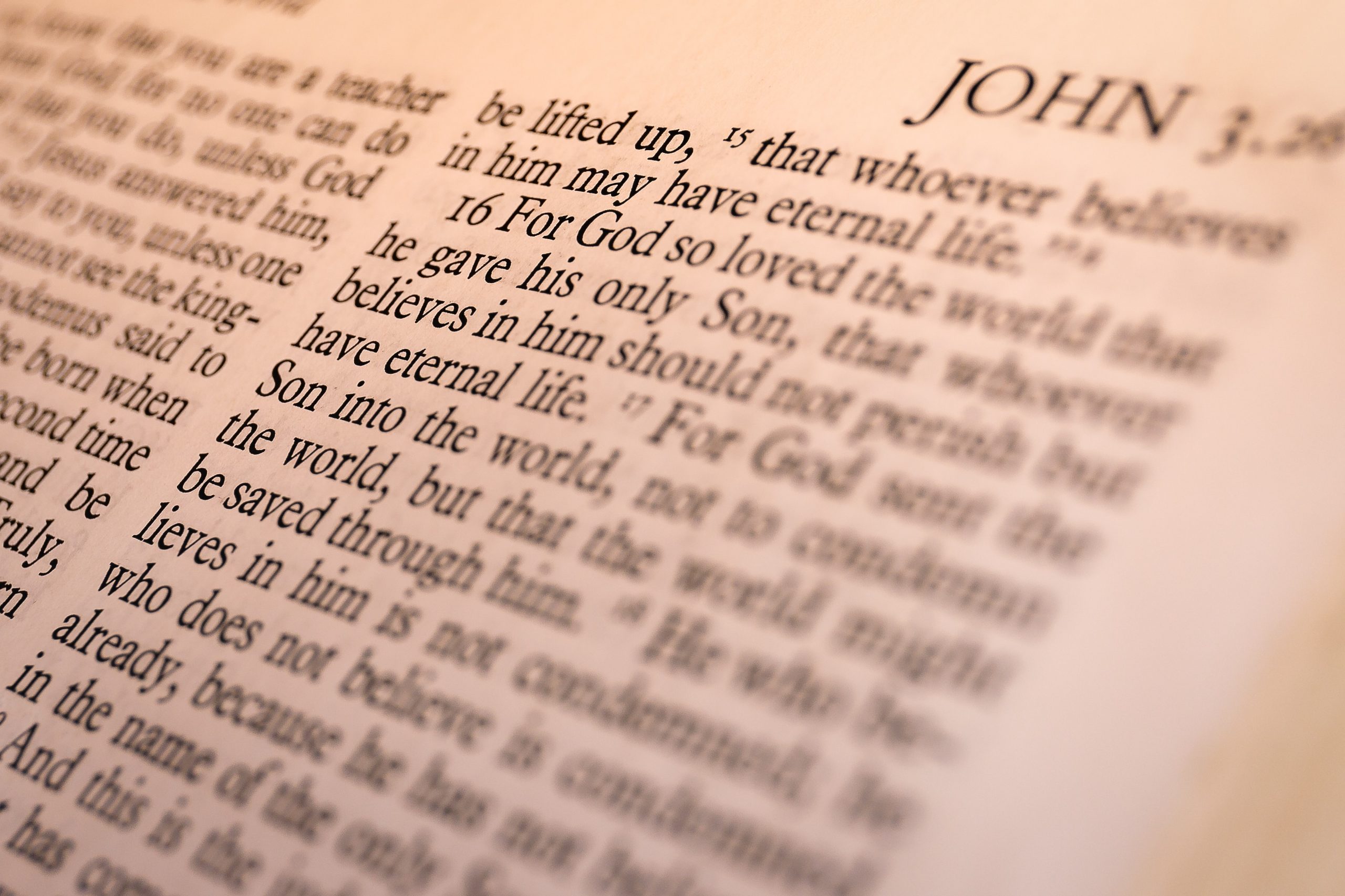
In arguably the most well-known verse there is in the Bible, John 3:16, it says, “For God so loved the world, that he gave his only Son, so that everyone who believes in him will not perish, but have eternal life.” And it’s this Son-sending, eternal-life-providing love of God that we’re going to focus on with our time today.
SERMON MANUSCRIPT
I love the words right at the end of the performance there: “The first Christmas proved to be nothing like we expected, but everything that we needed. This is thanks to Jesus, who would grow up to save you and me, so there is always a reason to celebrate.” I think this speaks true, as the play alluded to, not just when it comes to our expectations about the Christmas season, but in looking at our lives as a whole.
We all know that life doesn’t always (or often) go the way we plan or desire it, from small disappointments and frustrations, to major loss and suffering. Yet for those of us who are Bible-believing Christians, we would say that God knows what we need, even when things aren’t going the way we want them to (a truth that it sometimes easier to say than it is to believe or feel.)
We know that in the midst of the chaos when Mary and Joseph journeyed to and arrived in Bethlehem, God provided a place for Jesus to be born; and it’s a story that is known and remembered by millions, if not billions, of people around the globe, even after 2000 years. We know that what Harper reminded us of is true: that Jesus being born on that not-so-silent night was exactly what we as humanity needed, because he would grow up to save us.
In arguably the most well-known verse there is in the Bible, John 3:16, it says, “For God so loved the world, that he gave his only Son, so that everyone who believes in him will not perish, but have eternal life.” And it’s this Son-sending, eternal-life-providing love of God that we’re going to focus on with the time we have left today.
If you have a Bible with you, I invite you to turn to Romans chapter 5
Last week, Josiah ended his sermon talking about the peace that we have and can experience with God when we are justified by faith in Christ, looking at the first two verses of this chapter. Today we’re going to continue into the next several verses, seeing some more benefits of that justification, as well as the motivation behind that justification, which, spoiler alert, is God’s love.
As we read these verses today, we are going to see that because of God’s outpouring of love in the sending of Jesus as that babe in a manger, we can be sanctified by our suffering, we have been given a solution to our sin, and we have access to salvation for our souls.
Sanctified by our Suffering
And not only this, but we also celebrate in our tribulations, knowing that tribulation brings about perseverance; and perseverance, proven character; and proven character, hope; and hope does not disappoint, because the love of God has been poured out within our hearts through the Holy Spirit who was given to us.
Romans 5:3–5 NASB
It may seem strange to be talking about suffering and “tribulations” today of all days, with the joy and celebration of the Christmas play in the air. But the reality is that this time of year is hard for many people, even if just for the simple reason that we want things to be back to “normal” as the kids talked about.
Now, I’m not going to attempt to dive into the intricacies of understanding suffering in the time we have left. Nate gave us a great overview when he preached on the book of Job a few weeks ago. But let’s at least look at what this passage has to say about suffering, specifically keeping in mind God’s love.
There are a number of Bible passages that talk about our response to the inevitable suffering in this life, but one of the reasons I am particularly fond of this one is because it really walks us through exactly how God uses the tribulations in our life for his purposes.
That is to say, we see the process by which we are sanctified by our suffering. Tribulations lead to perseverance. Perseverance leads to proven character. Proven character leads to hope. We see the progressive path that allows the trials of this life to lead to the hope we have, not just in the life to come, but in the midst of where we are now, here on earth. Because the growth we experience in our character by persevering through trials points to the truth that we can trust in God’s process and his promises. That though he might not do what we want, he will do what we need. Our growth is evidence of his Spirit working within us.
Now I don’t want to focus too much on hope, because I believe that is going to be the theme of next Sunday’s message. But what we see described here in verse 5 is a “hope that does not disappoint, because the love of God has been poured out within our hearts through the Holy Spirit who was given to us.” This speaks to the reality that as we go through trials and tribulations in this life, we’re actually able to experience the love of God through his Spirit within us in a way that we may never have experienced it without those trials.
Suffering can build within us a certainty of God’s love. This might sound backwards, as it’s easy for us to default to asking “where is God in my suffering?” or “if God loves me, why would he allow me to suffer?” But on the flip side, perhaps you can think of or remember a time when you were actually drawn closer to someone, maybe even God himself, because of the way they cared for, and comforted, and loved you in your suffering.
My university roommates still give me a hard time when we get together, about the time that I broke my ankle the day before we moved out of our student house. But while it’s an easy target to joke about in hindsight, what I remember from the time was feeling lots of emotional pain (on top of the physical pain) from being completely useless in helping with the move, and actually making so much extra work for everyone else. But I also remember how graciously they all pitched in to help me out. How my mother drove down to Guelph to help with my share of the work. In spite of feeling awful for making everyone’s life harder, I really felt loved and cared for that day.
Furthermore, what Paul is acknowledging here is that we can celebrate or boast in the fact that our suffering doesn’t have to be in vain. It’s not just suffering for suffering’s sake. God, through his love, allows our suffering to be useful. To grow us and shape us and mold us. We might summarize a thought here as, “If I have to suffer, at least I can get something out of it.”
And while it doesn’t make pain less painful, it’s definitely more endurable when we know that God is able to redeem it or use it for our benefit. Paul says, when we properly understand this, how God lovingly brings positive results out of such negative situations, it can even bring us to the point of celebrating in our suffering. Not in a “man my life sucks. Let’s party!” sort of way. But more, “this sucks, but wow how much worse would it be if I didn’t have God comforting me in the midst of it!” We can be confident in knowing that whatever we have gone through, are going through, or will go through, God is bigger than it all, and he will find ways to sanctify us through our suffering.
Now, this is a tough teaching. And I’m sure I’m not doing it justice. The last thing I want is for someone who is suffering right now to feel as though I’m being dismissive of their pain. That’s definitely not my intention. So if that’s you, and you’re going through heavy trials and tribulation right now, my prayer for you is that you will experience God’s love anew, being comforted by him in ways you may not have thought possible; and that you will find peace in knowing that God can redeem this suffering and use it to help you become more like his Son.
Solution to our Sin
Ultimately, we know that suffering is nothing new; that it came along when sin entered the world back in Genesis 3.And while we can celebrate in the knowledge that God’s love allows us to be sanctified in our suffering, how much more can we rejoice that God lovingly sent a solution to our sin.
For while we were still helpless, at the right time Christ died for the ungodly.
Romans 5:6 NASB
Elsewhere in Romans, and in Paul’s other writings, we are reminded that none of us are righteous or free from sin, and that there is nothing we can do in our own strength to deal with our sin, stop sinning, or free ourselves from the consequences of our sin. This is really encapsulated here with the word “helpless”. In Greek the word is literally the negative or the opposite of strength. Think “symmetrical” and “asymmetrical”. The word here is basically “a-strong” or “unstrong”. Weak, useless, pitiful.
In the midst of our inability to do anything ourselves, Christ died for us, the ungodly. Which is actually harsher than just saying “those who do wrong” or “those who aren’t perfect”, but really acknowledging that in our sin, at our core, we are against God. Apart from Christ and his work on the cross, our sin makes us opposed, separate, anti-God.
For one will hardly die for a righteous person; though perhaps for the good person someone would even dare to die.
Romans 5:7 NASB
This verse is really there to set up the contrast with how different Jesus is from anyone else, and how great his actions were in comparison with what anyone else would do.The variation here between “a righteous person” and “the good person” seems to perhaps be akin to the difference between someone who is spiritually mature on the inside and someone who does a lot of good, helpful deeds on the outside.
So one potential, illustrated retelling might say something like: “no one would die even for the most mature Christian in their own church. Maybe someone would risk death for the sake of someone who does a lot of essential good for the community.”
But in contrast to all of that, we have verse 8.
But God demonstrates His own love toward us, in that while we were still sinners, Christ died for us.
Romans 5:8 NASB
The fact that God came to us in flesh as a baby is incredible. But the fact that that baby would grow up, live a perfect life, and then willingly give himself in sacrifice for us while we were still sinners is mind-blowing. It doesn’t make sense! People wouldn’t even die for the good people they know, yet Jesus died for the worst, the lowest of the low, the vilest offender.
I love the phrasing there: “God demonstrates his own love towards us”. What this tells us is that if we are ever questioning God’s love, unsure of God’s love, doubting God’s love; we only have to look to Jesus and remember: he gave his life for me.
And this verse stands in stark contrast to any who would suggest that someone has to live a certain quality of life before they can be saved. That they need to give up certain lifestyles or habits. That they need to understand theology, or give to charity, or have their good outweigh their bad. In the midst of our depravity, Christ died for us, making a way for us to be reconciled with God, and declared righteous in his eyes. He gave us the solution to our sin. And in direct follow-up we move to verse 9.
Salvation for our Souls
Because in providing the solution to our sin, God’s love poured out in Christ’s death and resurrection, Jesus offered us salvation for our souls.
Much more then, having now been justified by His blood, we shall be saved from the wrath of God through Him.
Romans 5:9 NASB
Now, Josiah covered this topic wonderfully last Sunday, and I’m not going to rehash everything he said. But the important points are these:
God is perfect and just. We are all sinful, and by our sin we have infinitely missed the mark of God’s perfect standard. Left to our own devices, we are “helpless” and ungodly, deserving punishment for our sin. But (and this is the utmost important but), while we were yet sinners, Christ died for us. He took the punishment for our sin on himself, so that we can be forgiven, and by believing him, be saved from God’s perfectly just wrath, and spend eternity with him. We have the offer of salvation for our souls, because God so loved us.
As we prepare now to take communion, where we remember God’s love poured out for us through the body and blood of Christ, I invite you to consider how you might respond to today’s text and the realities of God’s love.
If you are here today and you haven’t trusted in the person and work of Jesus for the forgiveness of your sins and salvation of your soul, my hope and prayer for you is that you would see what it is that Christ is offering you, and that you would grab hold of it by believing in him.
For the rest of us, the invitation is to respond in whatever way a deeper understanding and appreciation of God’s love draws out. Maybe it’s gratitude; a heart of thankfulness for the ways he sanctifies us in our suffering, provides a solution to our sin, and offers salvation for our souls. Maybe it’s prayer; asking God that you would experience his love more deeply in ways that are comforting, encouraging, shaping, and transforming. Maybe it’s joy, hope, peace, and love, bubbling up within us to the point of overflowing to all those around us.
We’re going to take communion, the bread representing Christ’s body given for us, and the cup representing his blood poured out on our behalf. And in the silence that follows, share your response with God. Praise him, thank him, request of him. Then after a few moments, we are going to respond corporately by singing together. Let me pray and then we’ll take communion.

Andrew is the Associate Pastor at Oakridge Bible Chapel. He grew up in a Christian home, and spent time serving in churches of varying sizes and denominations before landing at Oakridge with his wife in 2017. He likes to verbally process theological issues he finds challenging and is always ready to learn something new. He has a passion for teaching the Bible, and seeking to explain confusing passages in a clear way, preferably with a good illustration or two.